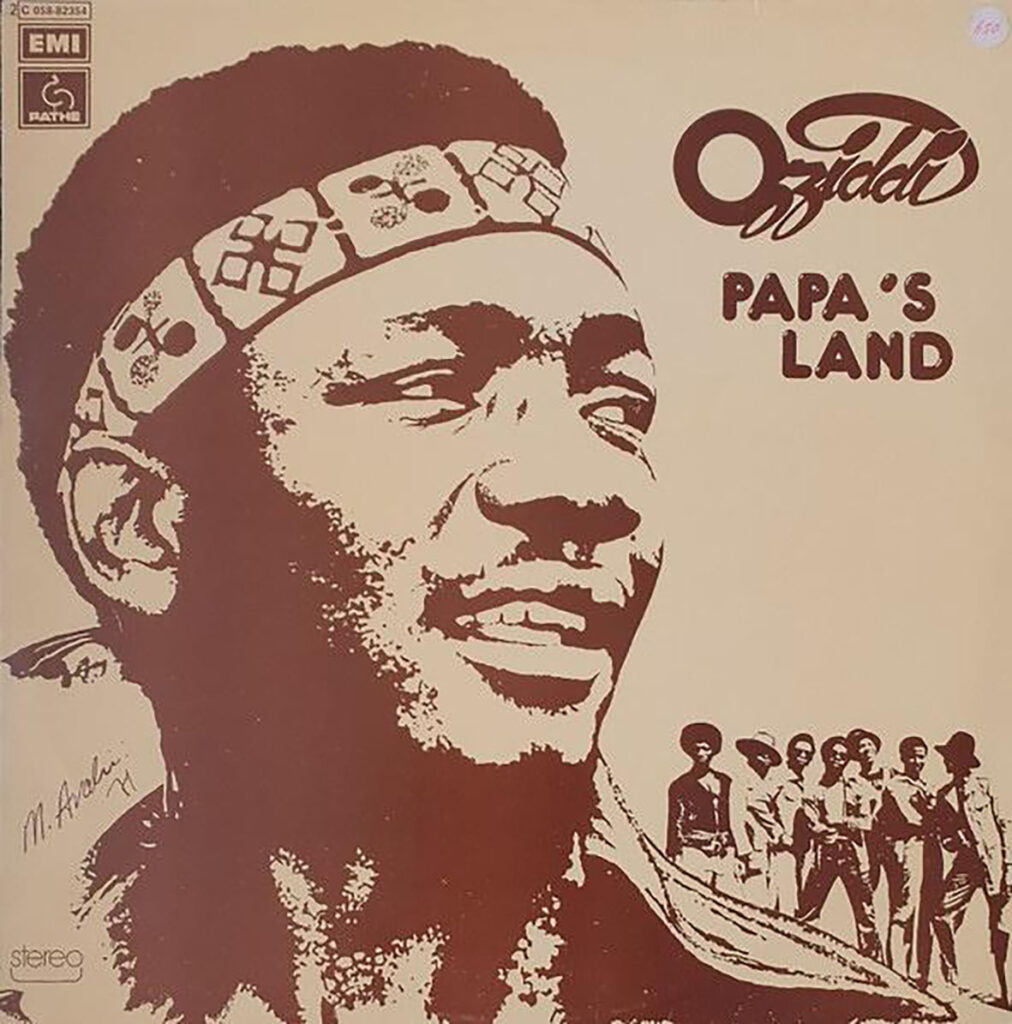
Sonny Okosun's Papa's Land album transcends music. It stands as a political manifesto, a freedom anthem, and a haunting testament to Nigeria's once-central role in Africa's anti-apartheid struggle.
Okosun and his Ozziddi band released the album in 1977. It remains one of Nigeria's most powerful musical indictments of South Africa's apartheid regime.
The production blended reggae, highlife, Afrobeat, funk and soul into something simultaneously energetic and uncompromising. Eddy Grant, the Guyanese-British musician with his own fierce anti-apartheid politics, produced the record.
Grant's involvement gave Papa's Land a wider Black Atlantic reach. The album spoke across borders and oceans to shared struggles.
The title track sits at the album's heart. It declares that South Africa's apartheid wasn't merely South Africa's problem—it was Africa's wound, Africa's moral reckoning.
Two words carry enormous weight: Papa's Land. Whose land belongs to whom?
Under apartheid, that question had a brutal answer. Laws, police violence and racial hierarchy stolen the continent's birthright from its own people.
Black South Africans became strangers in their homeland.
Okosun grasped this not as distant commentary but as lived continental injury. His music rejected sympathy in favor of solidarity.
He sang that diminishing South Africans diminished every African. That recognition defined the album's power.
Musically, Papa's Land refuses to separate dance from defiance. Bright grooves accompany serious subject matter.
Brass lines announce themselves like public testimony.
Guitars carry both tenderness and urgency simultaneously. Percussion gives everything a marching momentum without rigidity.
Vocals arrive direct, almost sermonic, yet never hollow.
Okosun performed not as entertainer chasing applause. He sang as witness confronting history itself.
His Ozziddi sound occupied unique territory in Nigerian popular music. He wasn't Fela's raw confrontationalism, nor roots reggae's spiritual meditation.
Instead, he inhabited that powerful space: the Pan-African popular prophet. His approach balanced accessibility with substance, militancy with melody, politics with genuine warmth.
That equilibrium explains Papa's Land's enduring resonance. It functions as music but refuses reduction to mere sound.
Argument, memory and accusation run through every track.
Understanding Papa's Land requires understanding the Nigeria that birthed it. Nigeria's apartheid opposition wasn't rhetorical window dressing.
It operated institutionally, diplomatically, financially, culturally and emotionally. The National Committee Against Apartheid mobilized both official and grassroots resistance.
Nigeria didn't merely condemn apartheid diplomatically. Nigerians received public education about why apartheid concerned the entire continent.
Official structures emerged to support those suffering under apartheid oppression. Nigeria's commitment went beyond speeches.
Artists like Okosun understood their role in this broader Pan-African project. Papa's Land wasn't personal expression divorced from national purpose.
It channeled Nigeria's institutional anti-apartheid stance into something visceral and unforgettable. The album became cultural weapon in liberation's arsenal.
Today's context makes Papa's Land particularly poignant. Nigeria's revolutionary commitment to African liberation has dramatically faded.
Contemporary Nigeria struggles to maintain even bilateral diplomatic relationships. Continental leadership feels like ancient history.
Yet Okosun's album endures as evidence of what Nigeria once represented. It documents a moment when artistic expression served continental conscience.
Papa's Land reminds us. Africa's liberation was once non-negotiable principle, not optional sentiment.