
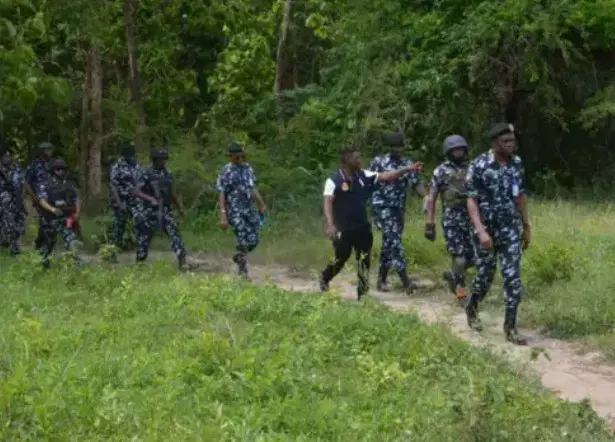
Fifty days have stretched into an eternity for three communities in Oyo State. On May 15, 2026, gunmen stormed Baptist Nursery and Primary School in Yawota, L.A.
Primary School, and Community Grammar School in Esiele, abducting 42 pupils and education workers into the vast wilderness of the Old Oyo National Park.
They remain missing. The silence that followed that day has become something tangible—settling on doorsteps, filling empty classrooms, and haunting homes where parents still wait for children who never came back from school.
Intelligence sources identified the perpetrators as members of Boko Haram, operating from a forest cell within the park. For security analysts, the revelation sent shockwaves through the country's threat assessment framework.
The South-West had long been considered largely insulated from the insurgent violence devastating Nigeria's North-East, North-West, and North-Central regions. That shield had cracked.
A retired counter-insurgency expert spoke to the implications plainly. "The idea that extremist groups are fixed to one region is no longer sustainable," he said.
"They adapt, they migrate, and they exploit ungoverned spaces wherever they exist."
The attack exposed what analysts now call a "quiet but profound shift" in Nigeria's security map—one that suggests the geographical fluidity of insurgent operations had been dangerously underestimated. What started as a local tragedy has morphed into a complex national security crisis.
On Saturday, June 27, a journalist navigated the five-hour journey from Ibadan to Oriire Local Government before the state government's curfew tightened. Each mile of lonely highway and isolated settlement deepened the sense of dread gripping the region.
As the bus approached Oriire's outskirts, casual conversation died away. An uneasy quiet took its place.
Soldiers occupied strategic positions along the roads, yet their presence offered little comfort. Reports had spread that the kidnappers had disguised themselves in military uniforms, blurring the line between protector and threat and leaving travellers suspicious of every man in uniform.
The military had imposed strict boundaries on civilian movement. Several routes lay completely barricaded, and soldiers repeatedly warned that venturing beyond approved corridors invited danger because security operations remained active.
The restrictions reflected a community transformed. Families now live under the weight of uncertainty, caught between hope for rescue and deepening fear that it may never materialise.
The vulnerability of rural education systems has become brutally apparent, as has the growing boldness of networks once thought geographically contained.
Rural Oyo State finds itself navigating new realities. Security concerns have reshaped daily life, mobility, and the rhythms of ordinary existence in ways that extend far beyond the three affected communities.
The 42 abductees remain unaccounted for—trapped in forests that have become a theatre of national anxiety. Their absence reverberates far beyond Esiele, Yawota, and Ahoro-Esinele, forcing Nigeria to confront uncomfortable truths about the evolving nature of its security threats.