
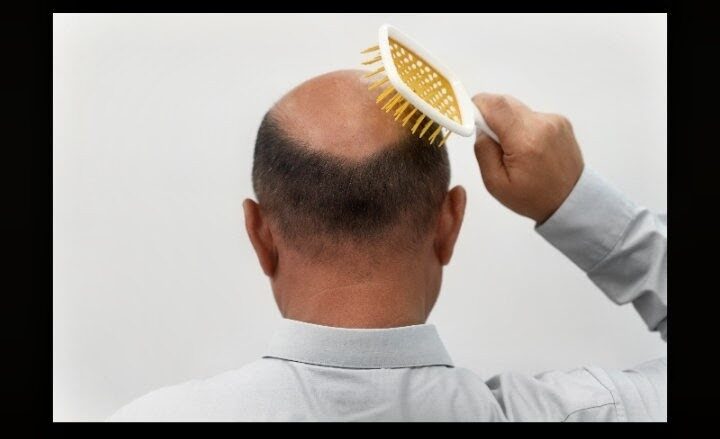
Many people experience a peculiar moment staring into the mirror. They notice their hairline receding and think: "This is what happened to my father."
That recognition stirs up conflicting emotions. Resignation mixes with anxiety in equal measure.
But understanding the biology behind hereditary hair loss changes everything. Knowledge shifts how you respond to it.
Androgenetic alopecia is the medical term for hereditary balding. It affects both men and women equally.
The word itself reveals the process at work. Androgens and genetics combine to trigger hair loss.
Here's what happens inside your scalp: certain hair follicles carry genetic sensitivity to DHT, a hormone derived from testosterone. Over time, DHT attaches to receptors in these vulnerable follicles and shrinks them.
Scientists call this miniaturization. Each growth cycle produces thinner, shorter strands than before.
Eventually the follicle stops producing visible hair entirely. Your genes decide which follicles are vulnerable.
That's why the pattern stays consistent. Men typically lose hair at the temples and crown.
Women experience diffuse thinning along the part line. Genetics make the outcome predictable.
Many people assume their parents' baldness guarantees their own. That belief is only half correct.
Genes create predisposition, not destiny. They don't determine everything.
Your hormonal balance influences how genes express themselves. Scalp health matters tremendously.
Nutrition, stress levels, and when you intervene all play roles. You can't change follicle sensitivity.
But you can transform the environment those follicles inhabit. A well-nourished follicle with good blood flow miniaturizes slower.
Neglected follicles deteriorate much faster. The difference is significant.
Most people wait far too long before acting. By the time thinning becomes obvious, damage is substantial.
You've likely lost between 30 and 50 percent of density already. Follicles don't collapse suddenly.
They gradually produce less hair until change becomes impossible to ignore. That's why early warning signs matter.
Increased shedding in the shower is one indicator. Hair falling on your pillow counts too.
Your part may widen gradually over months. Your hairline might appear higher or less defined.
Photos or certain lighting expose more scalp than before. None of these signs alone confirms anything definitive.
Together with family history, they warrant serious attention. A proper diagnosis requires pattern assessment.
Doctors examine your scalp closely during evaluation. Blood tests sometimes reveal other contributing factors.
Thyroid problems or iron deficiency could accelerate loss. Identifying these helps target treatment better.
Treatment isn't about reversing your genetics. It's about slowing the miniaturization process strategically.
Supporting follicle health matters when caught early. You might recover some density in active areas.
Multiple approaches work together at different levels. Strategy depends on how far loss has progressed.