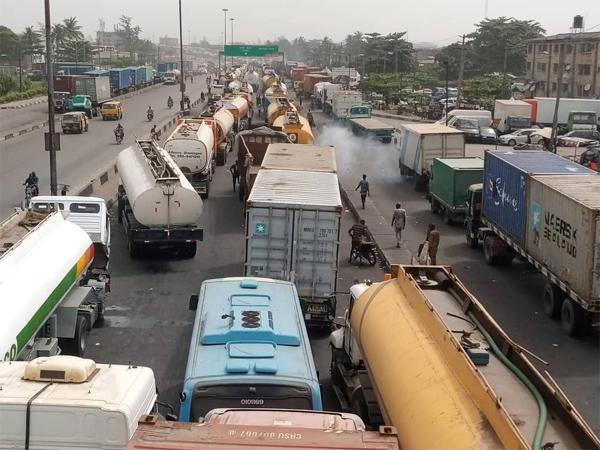
Oil cartels, independent petroleum marketers, tanker owners, drivers, transport unions and some enforcement agencies have been blamed for the crippling traffic jams that plague Lagos's Apapa and Kirikiri corridors. The gridlock has devastated businesses, disrupted residents' daily routines and strangled economic activities across the industrial zone.
Investigations revealed that thousands of traders, commuters and residents in the Apapa-Kirikiri axis bear the brunt of the persistent congestion. At the heart of the crisis sits petroleum distribution, where marketers, tanker operators and enforcement officials have turned public roads into unregulated truck parks.
While the downstream oil sector remains crucial for supplying Premium Motor Spirit, diesel, aviation fuel and other products nationwide, stakeholders point to poor logistics planning as the main culprit. Inadequate truck holding facilities, indiscriminate roadside parking, weak enforcement and corruption have all contributed to the chaos.
The fallout has been severe. Traffic gridlock, soaring transport costs, crumbling roads, delayed cargo clearance from ports, shuttered businesses and deteriorating living standards now define the corridor.
Observations showed that hundreds of petroleum tankers constantly line major roads connecting Apapa, Kirikiri, Coconut and Tin Can Port as they wait to load from depots and tank farms. Instead of staying in designated holding bays, many trucks queue for kilometres along highways, squeezing multiple carriageways into single lanes and making travel nearly impossible for other road users.
Major oil companies operating in the area include TotalEnergies, Conoil, Bovas Oil, Rahamaniyya, Obat Oil, Techno Oil, Aiteo, MRS Oil, Ardova, NIPCO, Integrated Oil & Gas, Folawiyo Energy, Matrix Energy, Eterna and Northwest Petroleum. Most tank farms and depots cluster around the Naval Base section of Apapa and the Mile 2-Kirikiri corridor.
Traffic flows relatively smoothly near the Naval Base, where firms like NIPCO and TotalEnergies operate, but the Mile 2-Kirikiri section suffers from relentless congestion. While some depots built holding bays years ago to meet regulations, most facilities can no longer handle current tanker volumes.
Stakeholders alleged that available parking spaces go underutilised because independent marketers, tanker owners, drivers, unions and enforcement personnel prefer roadside operations. These illegal arrangements reportedly generate millions of naira in payments, which participants then split among themselves.
The National Association of Road Transport Owners blamed tank farm operators for overcrowding their facilities with more trucks than they can handle. NARTO national secretary Aloga Gbogo told reporters that Apapa alone has more than 60 tank farms, each capable of loading about 300 trucks daily.
He questioned how many actually possess adequate holding bays.