Benjamin Kalu, deputy speaker of the House of Representatives, admitted on Wednesday that he fell for a scam involving a fake government agency. He said the group behind the Presidential Foreign Intervention Promotion Council (PFIPC) presented itself so convincingly that even senior officials were deceived.
During plenary, Kalu recounted how his office received a letter in May 2025 from an organisation claiming to be both the Presidential Economic Advisory Council and the PFIPC. The correspondence carried the presidency's insignia, official government branding, listed an office in the Federal Secretariat Complex in Abuja, and featured a ".gov.ng" website.
His staff carried out preliminary checks, including verifying the physical address provided, and officials confirmed the organisation was operating from the location stated. But Kalu grew suspicious when representatives eventually met with him face to face.
"They abandoned the policy issues contained in their letter and appeared more interested in taking photographs," he said. The unusual conduct raised red flags about the group's true intentions.
Kalu stressed that the incident showed how well-crafted impersonation schemes could fool even experienced government officials. "This shows that having the presidency on a letterhead is no longer sufficient proof that an agency is genuine," he said.
He urged lawmakers to investigate how the organisation secured office space within the Federal Secretariat and gained access to top government officials. His remarks backed a motion sponsored by Yusuf Gagdi calling for a full inquiry into the PFIPC's inclusion in the 2026 budget.
Gagdi argued that the allocation of more than N1.3 billion to the non-existent agency exposed serious weaknesses in Nigeria's budgeting process. He warned that other fictitious agencies could have slipped into previous appropriation laws without detection.
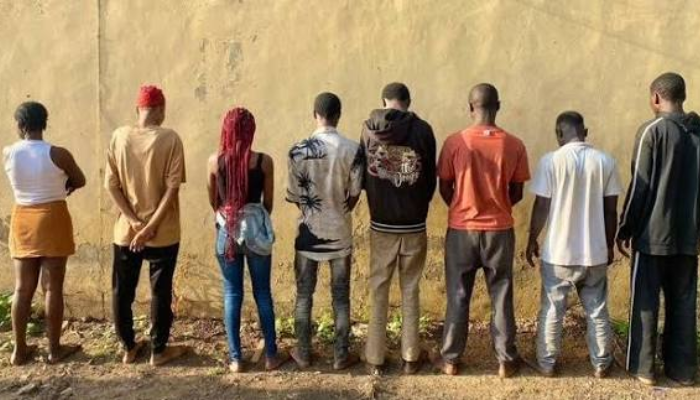
Although the organisation faces criminal proceedings before the Federal High Court in Abuja, Gagdi said the House inquiry would focus on how it gained official recognition within federal budgeting. The House resolved to set up an ad hoc committee to investigate the matter.
The committee will trace how the agency was captured in the 2026 Appropriation Framework, from the executive proposal through legislative consideration. Lawmakers want to understand every step that allowed a fake agency to secure billions in government funding.