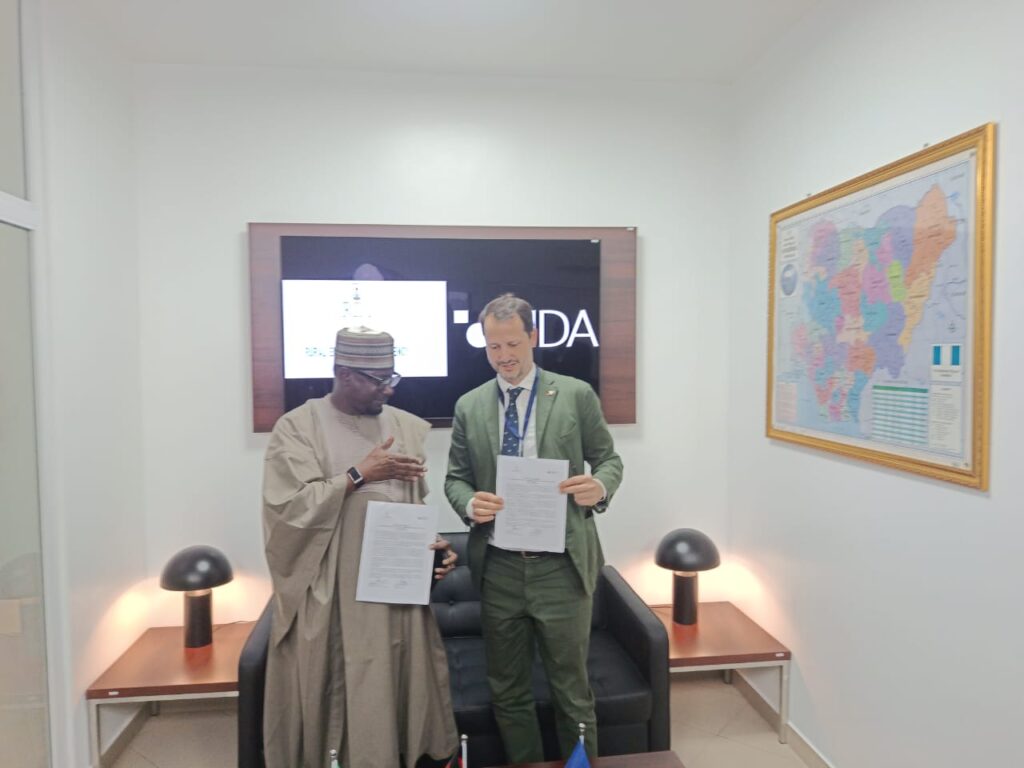
The Rural Electrification Agency has deepened its work with German technology firm VIDA to harness artificial intelligence in rolling out Nigeria's $750 million rural electrification initiative. The partnership, sealed through a joint statement signed in Abuja on Wednesday, aims to bring electricity to 17.5 million Nigerians.
Data-driven planning will now guide how the agency deploys renewable energy infrastructure across underserved regions. This approach ensures government money reaches the communities that need it most, at the lowest possible cost.
Abba Abubakar Aliyu, the REA's managing director, stressed that reliable information underpins success in expanding electricity access. "We do not want to just take this funding and start electrifying communities.
We need data. We need a plan that tells us where these Nigerians without electricity are located and what the least-cost option is for providing them with electricity," he said.
President Tinubu has approved the $750 million to electrify communities through 1,350 mini-grids, making strategic planning essential. Aliyu noted that without careful targeting, the agency cannot maximise the impact of such a substantial investment.
VIDA's artificial intelligence platform maps communities across Nigeria with precision. The system identifies households, analyses socio-economic data and pinpoints areas still without power.
This technology saves time and money by eliminating costly field surveys. "Imagine if we had to visit every community ourselves to determine the number of households and identify unelectrified areas," Aliyu said, adding that AI has given the agency better planning information while cutting expenses.
The partnership, which began roughly 18 months ago, has now been extended for another year on an annual basis. Aliyu confirmed that insights from this collaboration could extend beyond electrification to support wider economic development planning.
The REA is also investing in knowledge transfer initiatives. This ensures agency staff can operate AI-powered planning tools independently going forward, reducing long-term reliance on external partners.
Nigeria's model has caught the attention of other African nations eager to apply data-driven strategies to their own rural electrification programmes. The approach demonstrates how technology can reshape infrastructure deployment across the continent.
Tobias Engelmeier, VIDA's co-founder and chief executive, described Nigeria as one of the company's most vibrant markets for AI deployment. His firm combines data, mapping and analytics to help governments make faster and smarter infrastructure decisions.
"My interest is to make the best available technology accessible to the people who need it most, and Nigeria is a very strong use case," Engelmeier told those gathered at the event. He credited the REA's collaboration with development partners, including the World Bank, for demonstrating how AI-driven data improves transparency in infrastructure investment.