Nigeria's petroleum ministry is betting on clear rules and consistent enforcement to convince investors the country can chase net-zero targets without strangling the oil and gas industry that bankrolls government operations.
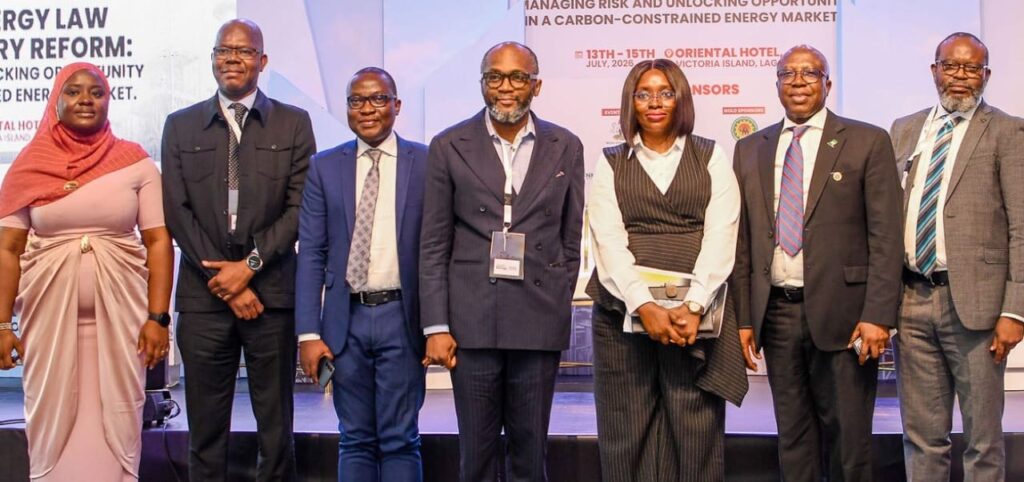
Senator Heineken Lokpobiri, the minister of state for petroleum resources, made this case at the Lawyers in Energy International Conference, a three-day event that wrapped up on July 15 at the Oriental Hotel in Lagos's Victoria Island. He didn't attend in person but sent Terlumun George-Maria Tyendezwa, the ministry's director of legal services, to deliver his message to conference delegates.
Tyendezwa told the gathering that Nigeria wants to chart its own energy transition path instead of simply copying frameworks built elsewhere. Lokpobiri's core argument centered on a straightforward principle: capital flows toward enforceable laws, not just written ones.
He pointed to the Petroleum Industry Act as the foundation for this regulatory overhaul. According to him, rules governing upstream and downstream operations are being tightened to eliminate confusion for operators navigating the sector.
The minister also highlighted the Climate Change Act and a homegrown carbon-credit scheme as proof that Nigeria intends to compete for climate-related investment rather than lose ground to rivals. He framed the regulatory push in sweeping terms, saying decisions made now by policymakers would reshape Nigeria's energy landscape for generations to come.
The continental view painted by Farid Ghezali, secretary-general of the African Petroleum Producers' Organisation, looked grimmer. Speaking remotely to the conference, he said resource wealth alone no longer attracts capital—investors now demand regulatory stability, tax predictability and solid contract enforcement.
Ghezali noted that more than 50 different legal and regulatory systems govern oil and gas work across Africa. This patchwork, he argued, drives up costs, derails projects and pushes money toward places with fewer legal surprises.
He added that the same fragmentation undermines continental infrastructure dreams. Cross-border pipelines, shared gas markets and linked power grids stall because incompatible laws turn business decisions into legal nightmares.
The African Petroleum Regulators Forum already offers a working model for this kind of cooperation among nations, Ghezali noted, pointing to its track record on safety and environmental standards. He cautioned that if African governments and businesses don't help write global transition rules, they risk having those rules imposed on them instead.
Ghezali also called for wider voices—from communities, young people and women—in shaping energy policy moving forward. George Etomi, who chairs the Lawyers in Energy Network board, told delegates that legal experts hold the key to balancing climate pledges, energy security and economic growth in the years ahead.