
Nigeria holds one of Africa's largest gas reserves, with the government estimating roughly 216 trillion cubic feet beneath the ground. The country now extracts more than 7.5 billion cubic feet daily, a figure that by conventional standards marks genuine resource wealth.
Step onto a factory floor in Lagos or ask residents in Ogun state about sourcing cooking gas, however, and the reality shifts dramatically. The gas exists in abundance, but moving it from the ground to those who need it presents the real challenge facing Nigeria's energy future.
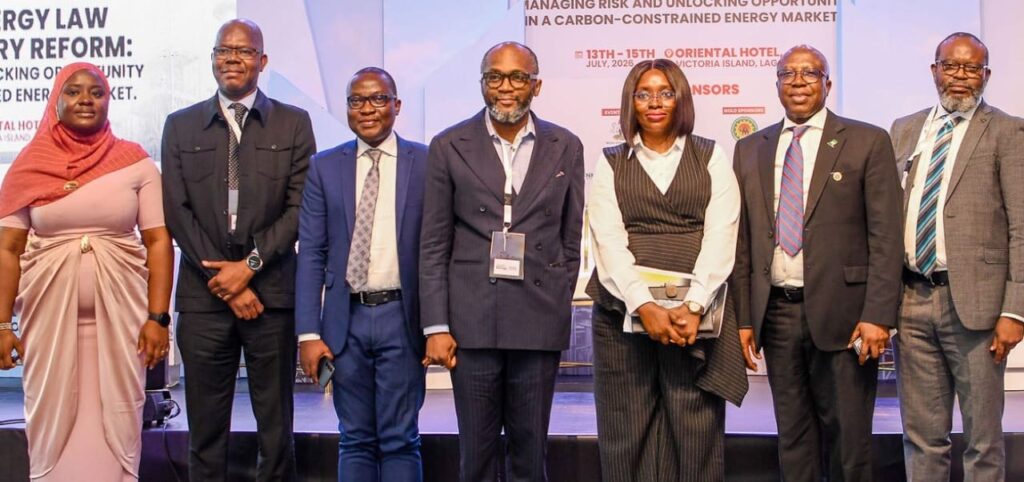
Industry leaders increasingly argue that infrastructure, not geology, will determine the sector's trajectory over the next decade. Audrey Joe-Ezigbo, chief executive of Falcon Corporation Limited, made this point this week while addressing the second Association of Local Distributors of Gas Business Forum in Lagos.
"It is tempting to search for a single policy that transformed Nigeria's domestic gas market," she said. "In reality, no such singular reform exists."
The forum, titled "From Gas Abundance to Gas Access," convened distributors, regulators and financiers around a persistent puzzle: why does a nation with such substantial reserves still struggle to deliver gas to consumers?
The numbers reveal the tension starkly. Domestic supply reached 2 billion cubic feet daily for the first time in the country's history this year, a milestone regulators cite as evidence their reforms are working.
Demand, though, tells a different story altogether.
Power plants, factories, transport systems and household consumption combined are expected to drive national demand to roughly 15 billion cubic feet daily by 2030. Current supply covers only about a seventh of that projected need.
Crucially, the shortfall doesn't originate upstream where oil and gas companies operate. Nigeria produces sufficient gas today to satisfy far more demand than currently reaches end users.
The missing piece is infrastructure: pipelines, processing facilities, distribution networks and the final-stage trucking and metering equipment that transforms reservoir gas into flame at a stove or power at a manufacturing plant.
Industry executives increasingly frame this as a midstream and downstream problem, not an upstream one. Reserve and production figures have improved substantially, but delivery systems haven't caught up.
Joe-Ezigbo challenged the popular idea that some single landmark reform unlocked Nigeria's gas market. Instead, she described a slower, more complicated evolution involving multiple separate reforms arriving years apart.
The Nigerian Gas Master Plan provided the foundation, she explained, introducing domestic supply obligations and tiered pricing while treating gas as a distinct commercial product rather than merely an oil extraction byproduct. That shift reoriented the sector's core approach.
What followed was a succession of measures building on that base: the National Gas Policy, the Gas Transportation Network Code, the Petroleum Industry Act, and the government's Decade of Gas initiative, each targeting different links in the supply chain.
The path forward, industry participants suggested, depends less on discovering new reserves and more on completing the unglamorous infrastructure work that connects existing resources to waiting consumers across the country.