
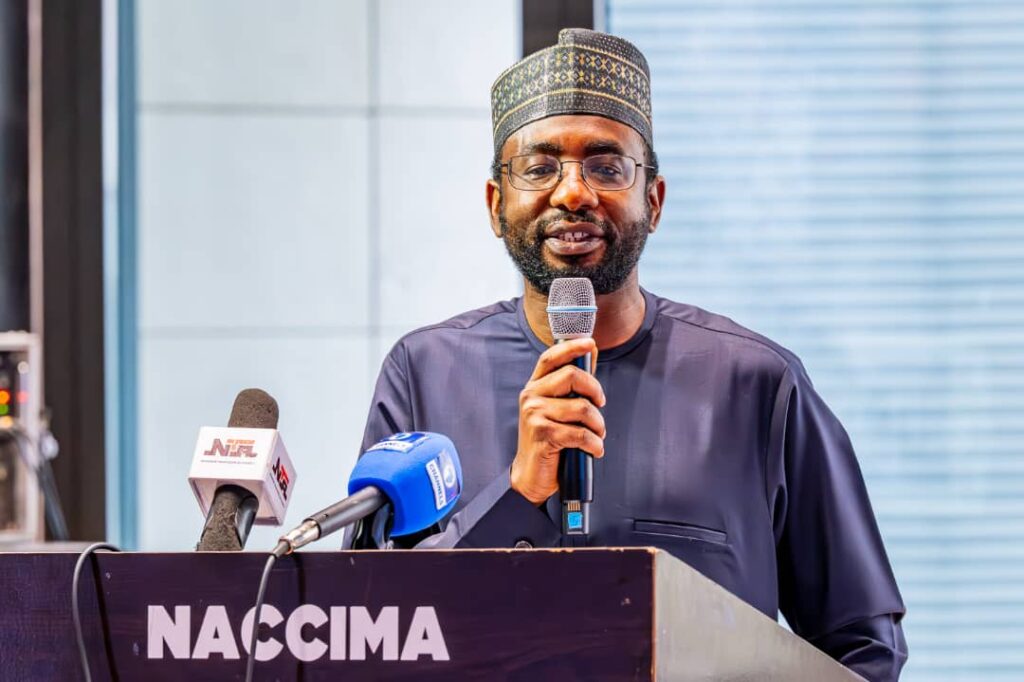
The National Information Technology Development Agency (NITDA) is demanding a fundamental overhaul of how Nigeria builds infrastructure, insisting that every major project must include a digital element to unlock the country's industrial and economic potential.
At the inaugural Nigeria Infrastructure Conference (INFRACON 2026) in Abuja, NITDA director-general Kashifu Inuwa argued that digital infrastructure can no longer exist in isolation. It must be woven into roads, ports, power generation, industrial zones and other vital national projects, he said.
The conference, convened by the Nigerian Association of Chambers of Commerce, Industry, Mines and Agriculture (NACCIMA), aimed to attract private investment into sustainable infrastructure across the nation.
"We cannot talk about infrastructure without digital infrastructure. All organisations and industries are becoming digital.
Technology is increasingly integrated into how economies function. There is therefore a need to integrate digital infrastructure into the conventional infrastructure we are building," Inuwa told delegates.
His intervention reflects a shift among Nigeria's policymakers. They now recognise that digital connectivity, data systems, cloud infrastructure, artificial intelligence and broadband networks matter as much to economic progress as electricity, roads and transport links.
Historically, Nigeria's infrastructure conversation has revolved around electricity, transport networks, railways, seaports and housing. Yet experts warn that nations competing in the digital economy must prioritise broadband expansion, data centres, digital identity platforms, cloud services and advanced technologies.
Integrated infrastructure drives efficient urbanisation, lifts productivity levels and strengthens businesses in an increasingly tech-driven world, Inuwa explained. The remarks come as Nigeria races to industrialise faster, diversify away from oil and embed digital tools across vital sectors.
Modern manufacturing, supply chains, healthcare, education and banking all depend on robust digital infrastructure. Without dependable connectivity and digital systems, traditional infrastructure investments often fail to deliver maximum economic returns.
Beyond urging digital integration, NITDA signalled readiness to strengthen ties between government and private capital to tackle Nigeria's massive infrastructure gap. The federal government has already created avenues for Public-Private Partnerships, Inuwa noted, urging the private sector to grab these opportunities.
"The government has initiated Public-Private Partnerships for the private sector to be part of building the infrastructure. NITDA will support you to work with the government in building the digital infrastructure," he said.
NITDA is already collaborating with NACCIMA to modernise some of the chamber's operational and infrastructure systems, according to the agency chief. The push reflects mounting pressure to find new funding sources as government budgets tighten and infrastructure needs grow ever more urgent.