Preparing a simple pot of soup for four people has turned into an expensive undertaking across Nigeria. A meal made with one kilogram of kote fish and N1,000 worth of pomo, stretching across two days of single daily servings, now runs about N12,000.
Modern Agriculture Farm notes that four years ago, the same amount would have purchased 10 kilograms of kote fish priced around N11,000, leaving roughly N1,000 to spend on a 50-cube pack of Knorr Chicken seasoning. In Lagos, N12,000 could alternatively have bought a 25-kilogram bag of rice back then.
This is what inflation means today in Nigeria. It's no longer simply a dry economic figure but rather the growing chasm between what people earn and what basic goods actually cost.
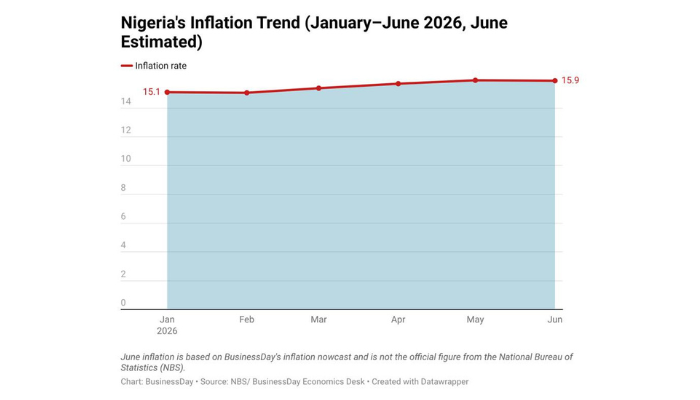
BusinessDay's inflation nowcast puts headline inflation at 15.9 percent for June, with estimates ranging from 15.7 to 16.1 percent, before the National Bureau of Statistics releases official numbers on July 15. Should this hold true, it would sit slightly below May's 15.93 percent, halting three straight months of climbing prices.
Yet the real story isn't the marginal drop itself but what it reveals about how Nigeria's inflation cycle is evolving.
Prices had fallen consistently over eleven months before reversing in March and continuing upward through May, sparking worries that disinflation efforts had stalled. The June projection hints that these renewed cost pressures may have eased somewhat, though not enough to signal a comeback of sustained disinflation.
BusinessDay's nowcast draws together the prior month's inflation figures, shifts in the official exchange rate, business activity via the Stanbic IBTC/S&P Global Purchasing Managers' Index, and adjustments for the National Bureau of Statistics' 2025 rebasing work.
What matters most is understanding what June's numbers actually tell us about Nigeria's inflation challenge.
Over the last two years, macroeconomic shocks drove inflation upward, chiefly exchange-rate weakening tied to foreign exchange reforms and subsidy removals. These shocks are gradually receding.
Instead, deeper structural problems persist: insecurity hampering farm output, costly transportation, inconsistent power supply, elevated energy expenses and logistical hurdles throughout supply chains.
This distinction carries real weight because monetary policy tackles demand-driven inflation better than it handles structural supply problems. The Central Bank of Nigeria executed one of history's harshest tightening cycles, pushing the Monetary Policy Rate from 11.5 percent in early 2022 to 27.5 percent before cutting it back to 26.5 percent this year.
The June estimate indicates this tightening has largely succeeded at its core goal: preventing another inflation explosion. Whether it can push inflation meaningfully lower remains an altogether different proposition.
This creates a tougher puzzle for policymakers heading into the Monetary Policy Committee meeting scheduled for July 20 and 21.