
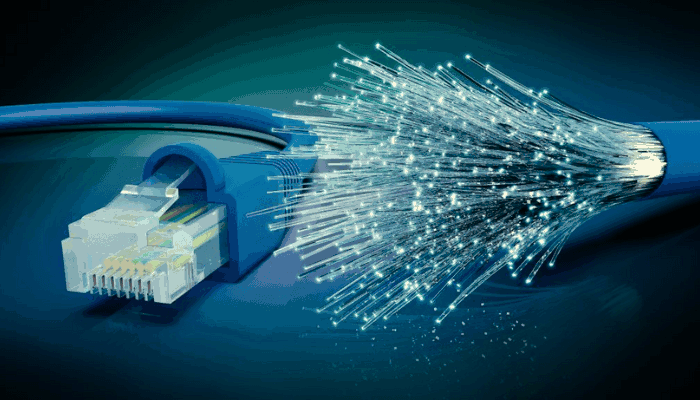
Nigeria's booming broadband sector is masking a critical gap in home internet infrastructure. Only about 265,000 households have access to fibre-to-the-home (FTTH) services, despite more than 154 million active internet subscriptions across the country, according to findings shared at an industry forum in Lagos this week.
The discrepancy reveals a paradox: explosive growth in mobile internet is hiding serious weaknesses in fixed, high-speed connectivity that modern economies require. Broadband penetration jumped to 55.67 percent from 48.81 percent year-on-year, while Nigerians now consume an average of 1.4 million terabytes of data monthly.
But most users depend on mobile networks that can't deliver the reliable, fast connections needed for demanding tasks. Mobile broadband covers wide areas but struggles with capacity, reliability, and upload speeds when networks get congested or users need stable connections for critical work.
Aminu Maida, chief executive of the Nigerian Communications Commission (NCC), told reporters on Tuesday that the infrastructure weakness threatens Nigeria's ambitions to build a $1 trillion economy. He spoke at the Association of Telecommunications Companies of Nigeria (ATCON) forum on fibre expansion, held in Lagos.
"Internet connectivity has become an essential service for Nigerians," Maida said, noting its role in education, business, healthcare, finance, and government.
Homes have transformed into hubs for learning, work, and services, yet most Nigerians can't access the stable, low-latency connections they need. The shortage of fixed broadband leaves the country lagging behind African averages and far behind more developed markets.
Multiple obstacles block fibre expansion. Right-of-way charges remain high and inconsistent in many states, though 13 have waived fees and 16 adopted the N145 per metre rate.
Bureaucratic red tape slows projects, while poor urban planning complicates installations.
Vandalism poses another serious threat. Nigeria recorded over 27,685 fibre cuts in 2025 alone, along with thousands of thefts and access denials that destabilise networks and scare off investors.
These barriers inflate costs and deter companies from investing in home fibre connections. Maida acknowledged that fixed broadband, especially FTTH, remains underdeveloped despite rapid overall growth.
Active internet subscriptions climbed to 154.72 million in April 2026 from 141.99 million a year earlier, the NCC chief noted. Data consumption surges driven by video calls, cloud services, online learning, e-commerce, remote work, and artificial intelligence applications.
Yet only 265,000 homes have FTTH subscriptions, a number Maida described as both a challenge and an opportunity for the sector moving forward.