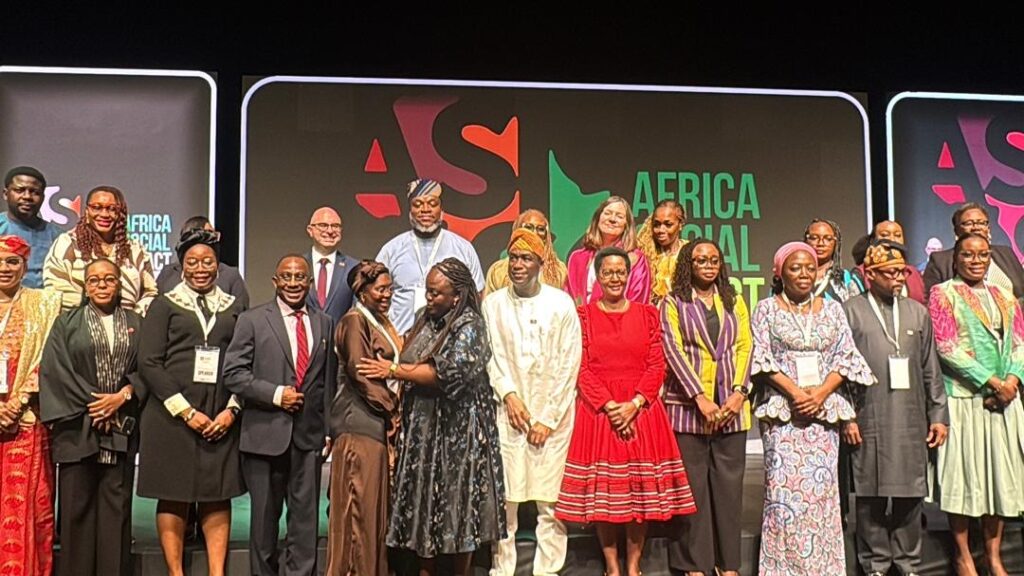
The Africa Social Impact Summit has urged innovative financing frameworks that will bolster resilience across the continent, empower communities and transform Africa's emerging economies into growth engines. The call came Thursday as the 2026 summit opened in Lagos, bringing together policymakers, development finance institutions, investors and business leaders.
Banji Oyelaran-Oyeyinka, chairman of the Africa Social Impact Network, told attendees the summit's theme reflects Africa's urgent need to rethink development financing. "The theme of our conference is not just timely; it is existential," he said.
According to him, the continent faces twin challenges: financing growth while protecting societies against economic, environmental and social shocks. "Without sustainable financing, development remains rhetoric," Oyelaran-Oyeyinka noted.
He stressed that financing powers industrialisation, enables infrastructure and sparks innovation. "It determines whether our young populations will inherit opportunity or despair," he added.
Sub-Saharan Africa will see the world's fastest labour force expansion, with over 620 million people expected to enter the workforce between 2025 and 2050, Oyelaran-Oyeyinka warned. The continent must build resilient economies to withstand future shocks from climate change, pandemics, debt crises and supply chain disruptions, he said.
Slow structural transformation remains Africa's biggest development hurdle, the development economist noted. Many countries shifted from agriculture to services without establishing strong manufacturing sectors, he explained.
"Manufacturing remains the engine of economic growth and the most significant creator of jobs," Oyelaran-Oyeyinka said. He stressed that thriving service economies depend on manufactured products.
Africa's reliance on imported manufactured goods has left the continent vulnerable, he warned, citing the COVID-19 pandemic when developing nations struggled to access vaccines. This dependence underscores structural weaknesses needing urgent attention.
Persistent poverty and unemployment signal a structural growth trap requiring accelerated industrialisation, value addition and productive employment, according to him. "We cannot solve Africa's jobs crisis with the current economic structures," he said.
Africa needs a new development model prioritising value addition, industrial competitiveness and manufacturing, Oyelaran-Oyeyinka argued. "Transformation is the journey from dependency to self-sufficiency, from exporting raw materials to producing value-added goods, and from poverty to shared prosperity," he said.
He called on governments, investors, development partners and the private sector to move beyond dialogue and commit to financing models delivering measurable outcomes. Collaboration must replace endless discussion, he urged.
Governor Babajide Sanwo-Olu, represented by deputy governor Obafemi Hamzat, echoed calls for stronger collaboration among governments, development finance institutions, the private sector, philanthropic organisations and impact investors. Closing Africa's financing gap requires unified effort, Hamzat told the summit.