A 29-year legal battle has finally ended at Nigeria's apex court. The Supreme Court recently settled a crucial question about which courts can hear certain disputes.
His Highness Obong David Edu and 31 others had challenged Mobil Producing Nigeria Unlimited over land compensation. Two other defendants were also named in the case.
Jurisdiction matters deeply in Nigerian law. Without it, even the strongest case falls apart in court.
The Ekid people of Akwa Ibom State wanted fair payment for their lands. Oil companies had used these lands for exploration and production work.
They said compensation was never adequately paid. The community also claimed they hadn't been properly compensated for improvements on the land.
The Appellants took their case to the Federal High Court initially. That court sided with them and gave judgment in their favour.
Mobil and the other defendants weren't satisfied. They appealed to the Court of Appeal, questioning whether the Federal High Court had any right to hear the matter.
Ituah Imhanze represented the lead respondent at the appellate level. He argued the case belonged elsewhere entirely.
According to him, this was fundamentally a land dispute. The Federal High Court had overstepped its powers by taking the case.
The Court of Appeal agreed with this reasoning. It found the case involved compensation for acquired land and nothing more complex than that.
Since it was a land matter, the appellate court said it fell under State High Court jurisdiction instead. The trial court's decision was reversed and set aside.
Undeterred, the Appellants pushed forward to the Supreme Court. Enyinmfor Nwoka represented them before Nigeria's highest court.
He contended the dispute involved petroleum operations. Federal agencies were parties, he noted, making it a federal matter.
KENNA LP represented the first respondent at the Supreme Court. They presented a different view of what the case was really about.
It's not about who you sue that matters, they argued. Rather, it's the actual subject of the complaint that determines jurisdiction.
In their view, compensation for land remained the core issue. No federal question existed in this dispute.
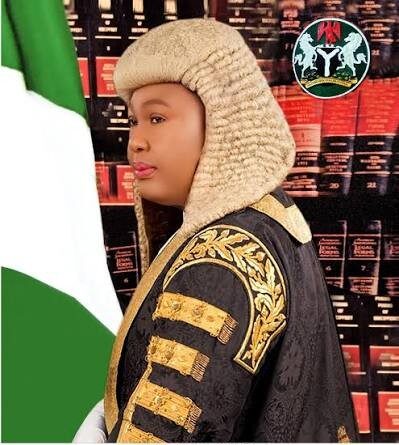
A five-member Supreme Court panel led by Justice Chioma Egondu Nwosu-Iheme heard the matter. The learned justice and her colleagues studied the arguments carefully.
They sided with the respondents on this jurisdictional question. The Supreme Court held that the Federal High Court's powers are strictly limited.
Section 251 of the 1999 Constitution lists those powers precisely. Simply naming an oil company doesn't change the nature of a claim.
Since compensation for land was the true subject, State High Courts held jurisdiction. The Supreme Court dismissed the appeal accordingly.
After nearly three decades, the Ekid people's legal journey ended. They would need to return to the State High Court to pursue their claim.