
The 2026 FIFA World Cup final on July 19th represents far more than a sporting contest. It marks the quiet end of an era that shaped global football for nearly a century.
Every great civilization experiences moments that historians later identify as the beginning of transformation. These shifts rarely announce themselves with revolution's fanfare, arriving instead wrapped in the language of progress and common sense.
Football may have reached such a threshold. When Argentina and Spain take the pitch in New Jersey, billions will believe they're watching a tournament conclude.
Few will recognize they're witnessing something far deeper: the death of a beautiful, romantic age.
For decades, the World Cup stood as the last refuge of the romantic. It thrived on an absurd, gorgeous belief that a child from a dusty street in Rosario, Lagos, or Manchester could reshape history through pure organic genius.
That era has ended.
The 2026 tournament has become a masterclass in forced sporting evolution. The game's heartbeat itself has become negotiable.
Mandatory hydration breaks, presented as medical necessity, function as tactical resets and convenient commercial windows for broadcasters.
When spectators watch a match interrupted by corporate mandates, they're no longer watching sport, they said. They're watching a product optimized for advertisement and governed by clocks rather than crowd energy.
The planned 30-minute halftime spectacle exemplifies this shift. It bypasses traditional IFAB regulations to prioritize broadcast revenue over player welfare.
This Americanization reveals football's true trajectory.
The distribution of footballing power hasn't shifted in decades; it has hardened into permanence. Since 1930, the trophy has never left Europe or South America. 2026 provides brutal confirmation this reflects machinery, not talent.
The world anticipated breakthroughs from other regions. Instead, it's witnessing global talent absorption into the highly professionalized, data-saturated infrastructure of traditional powers.
Institutional hegemony has defeated the underdog's romantic dream.
Raw genius still emerges from Dakar to Recife. Yet it's quickly absorbed into institutions designed to eliminate randomness before it reaches the grand stage.
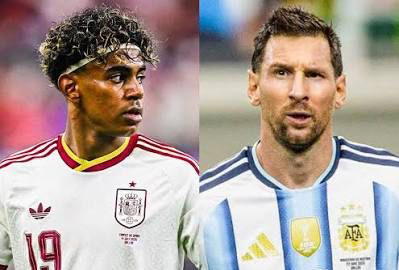
At this transformation's center stand Lionel Messi and Lamine Yamal. Their narrative perfectly captures this moment's tragedy.
A 2007 photograph shows a 20-year-old Messi gently bathing an infant Yamal in a blue plastic tub during a charity event.
Media engines have weaponized that image into mythic storytelling. Nearly two decades later, the baby has become the vanguard of Spanish revolution against his former caretaker.
The narrative sells itself through sentimentality.
Beneath that sentiment lies a colder truth. We're watching a machine replace its components.
Messi emerged from organized chaos where genius flowered unpredictably.
Yamal belongs to a different era entirely. Exceptional talent gets identified earlier, developed faster, and refined through systematic processes designed to eliminate waste.
The difference between these players isn't generational pride or romantic passing of torches.
It's the difference between a player who became great despite the system and one who became great because of it. That distinction matters more than any trophy.