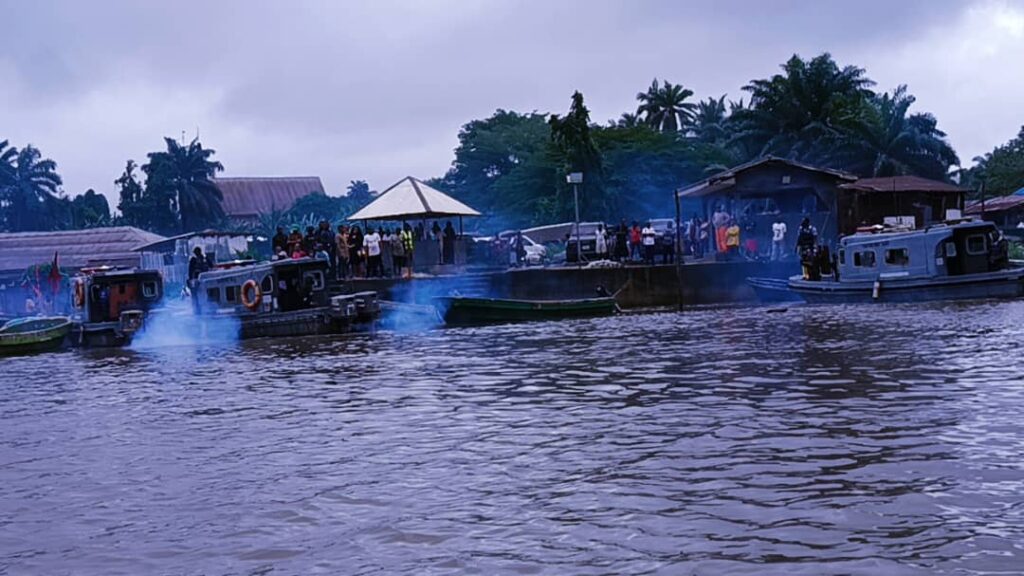
Heavy rain pounded Lagos on Monday, trapping thousands of motorists, commuters and residents as floodwaters consumed major roads, shuttered businesses and deepened misery in neighbourhoods already drowning for weeks.
Water submerged streets from Apongbon and Marina through Leventis, Ikoyi and Lekki, paralysing traffic for kilometres and grinding economic life to a halt across the commercial hub.
Commuters ditched vehicles and walked for hours as gridlock strangled key routes. The Apongbon corridor saw congestion stretch across Eko Bridge to Costain, leaving workers stuck and disrupting operations citywide.
The cost hit motorists hard. Several cars stalled in the deluge, sadling owners with repair bills and insurance headaches.
"I never knew that the water was very deep. I wouldn't have risked it," lamented a driver whose car died after pushing through floodwaters at Leventis.
Monday's crisis exposes a deeper crisis. Communities across Lagos remain waterlogged after weeks of relentless rainfall, sparking fresh alarm about whether the state is ready for what meteorologists warn could be an unusually wet season ahead.
In Ijagemo, Ijegun, within Ojo Local Government Area, residents have already fled their homes. Adeola Ibrahim, a community member, told reporters his family moved out two weeks ago.
"This year's flood is the worst we've experienced so far," Ibrahim said.
Residents had wagered that road construction projects in the area would unlock better drainage and curb flooding. They were wrong.
"This happened despite the newly constructed road in the area. The government refused to channel the canal despite spending huge amounts on road construction, further worsening our situation," Ibrahim explained.
The disaster has reignited rows over what causes Lagos to flood so often. Residents point fingers at weak drainage systems, clogged canals and chaotic urban planning, while state officials blame natural forces beyond their reach.
Tokunbo Wahab, Lagos commissioner for environment and water resources, blamed the deluge on a sharp spike in lagoon water levels.
"The flooding currently being experienced in some parts of Lagos is largely attributable to a significant rise in the lagoon water level, which has increased by approximately one metre," Wahab wrote on X.
The elevated lagoon, he noted, has choked drainage channels and stopped stormwater from flowing into the water body, forcing it to pool on roads and in communities instead.
"As rainfall subsides and the lagoon water level gradually recedes, the accumulated stormwater on affected roads and streets is expected to drain off," he said.
Wahab urged residents to stay patient, pledging that government teams were watching the situation and rolling out steps to soften the flooding's bite.


