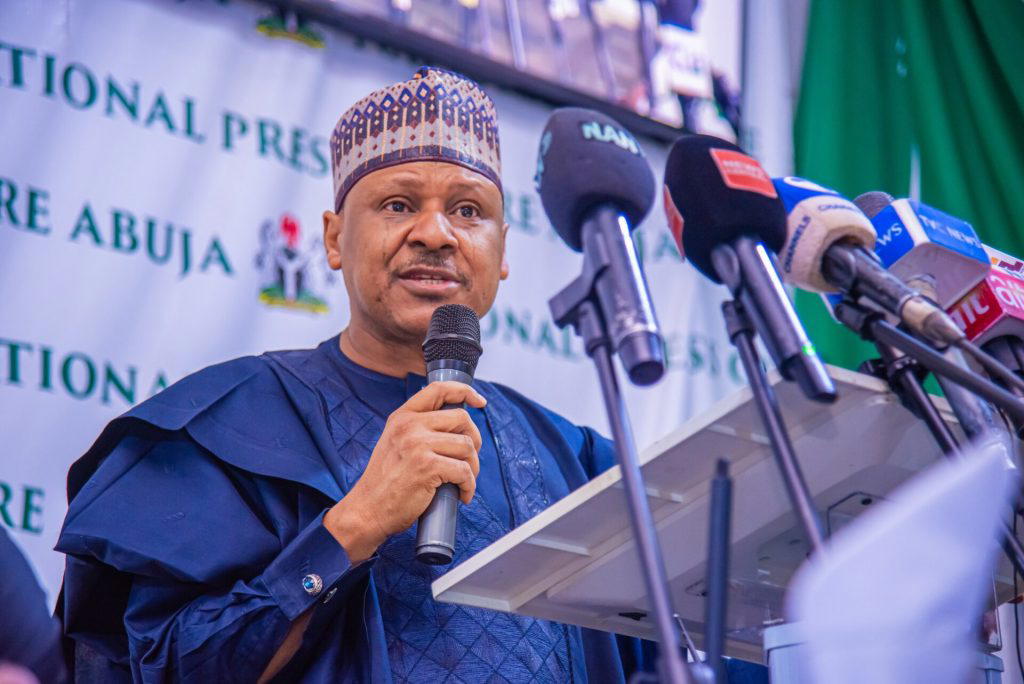

The Federal Government is pushing state budget commissioners to align their economic plans with a $1 trillion economy target by 2030. Doris Uzoka-Anite, minister of state for budget and economic planning, made the call while addressing state commissioners, permanent secretaries, and budget directors at a two-day retreat in Abuja.
Uzoka-Anite stressed that Nigeria's $1 trillion dream is no longer distant fantasy but demands urgent, coordinated action right now. The retreat aimed to convince stakeholders that achieving this goal requires every level of government to move fast and together.
She told the officials to shift from passive implementation to active leadership in their states. States must examine their unique economic strengths against national targets, then align local budgets and policies to match federal priorities, she said.
The minister noted that President Bola Tinubu's Renewed Hope Agenda provides the political backing for this push. The incoming Medium-Term National Development Plan (2026–2030) will serve as the roadmap for execution, she added.
Nigeria needs sustained GDP growth of between 10 percent and 12 percent yearly for the next decade to hit the $1 trillion mark, Uzoka-Anite explained. She reflected on how the administration's tough choices since 2023 are now paying off.
The removal of fuel subsidies—which she said cost Nigeria over $5 trillion annually—and the unification of the foreign exchange market were necessary but unpopular decisions. "Investors could not trust the signals our market was sending," she said, but "today, those reforms are being vindicated."
In January 2026, S&P Global Ratings upgraded Nigeria's outlook to positive, the minister disclosed. This affirmed international confidence in the country's fiscal, economic, and monetary direction.
The government is now rolling out its second wave of reforms called the Disinflation and Growth Acceleration Strategy (DGAS). This nine-pillar framework aims to shift Nigeria from a consumption-driven economy to one built on productive capacity.
Industrialization stands as a key pillar, moving the nation away from exporting raw materials—which currently make up 70 percent of inputs—toward domestic processing. The Dangote Refinery serves as a success model, Uzoka-Anite noted.
Infrastructure expansion features as another major pillar, covering broadband, data centers, and the Nationwide Energy Expansion Program combining solar, hydro, and gas. Human capital development targets technical training for 3 million young Nigerians annually.
Consumer credit reforms will launch a platform to make financing accessible for housing, education, and healthcare to ordinary citizens. Deborah Odoh, permanent secretary of the ministry, said the retreat strengthens federal-state collaboration and identifies practical ways to improve processes across government.