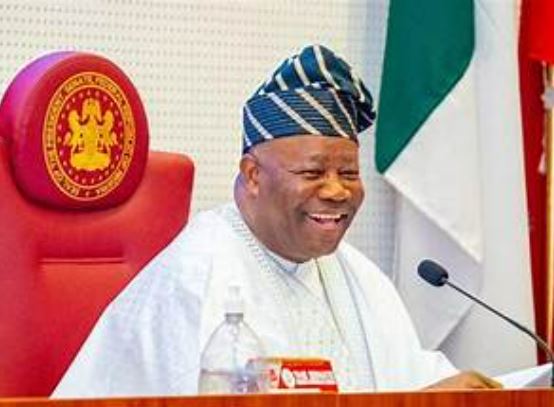

Vice President Kashim Shettima launched a $500 million agricultural fund for the Niger Delta on Wednesday, targeting a shift away from oil dependency towards food production. The initiative marks a return to farming as Nigeria's economic backbone, decades after crude oil overshadowed agricultural enterprise.
Shettima spoke at the Niger Delta Agricultural Development and Investment Summit, convened jointly by his office and the Niger Delta Development Commission (NDDC). He stressed that nations survive on many resources but endure only when they can feed their own people.
The vice president reflected on Nigeria's agrarian past, noting that groundnut pyramids in the north, cocoa estates in the west, and palm produce across the east financed early schools and hospitals. "Before a people raise cities, they must learn to feed them," he said, emphasising agriculture's role in national stability.
The Niger Delta sits on roughly 23 billion barrels of proven crude oil reserves valued at approximately $1.81 trillion. The region generates about $122.8 million daily for Nigeria's economy.
Despite this wealth, local communities have endured severe environmental degradation and poverty for years. The region loses an average of 240,000 barrels of oil annually to spills.
The area also holds 93.8 trillion cubic feet of recoverable natural gas. Yet farming remains largely subsistence-based, producing barely enough to feed residents rather than generating commercial surplus.
The Niger Delta's soil is rich for cultivating cassava, rice, yam, palm oil, cocoa and vegetables. However, agriculture has languished at levels of shifting cultivation without modern commercial development.
Shettima regretted that the oil boom weakened farming. "The oil boom came with an ease that dulled the industry of the cutlass, teaching the country that once fed itself to instead import what its own soil could grow," he said.
The vice president praised the Niger Delta for choosing to develop agriculture rather than simply relying on oil revenues. "What makes this vision inspiring is that it arises from a region that could have rested on its oil wealth," Shettima noted.
He highlighted that palm oil from the Niger Delta region fuelled continental commerce long before crude oil drilling began. "The Niger Delta has chosen to transform this region, feed the nation, and attract the world," he added.
According to Stanley Nkwocha, senior special assistant to the president on media and communications in the vice president's office, Shettima described agriculture as "not only the foundation of civilisation but also the first guarantee of political stability."
The $500 million fund operates as a commercial, returns-driven vehicle spanning the agricultural value chain. It covers aquaculture, palm oil production and cassava processing among other sectors.