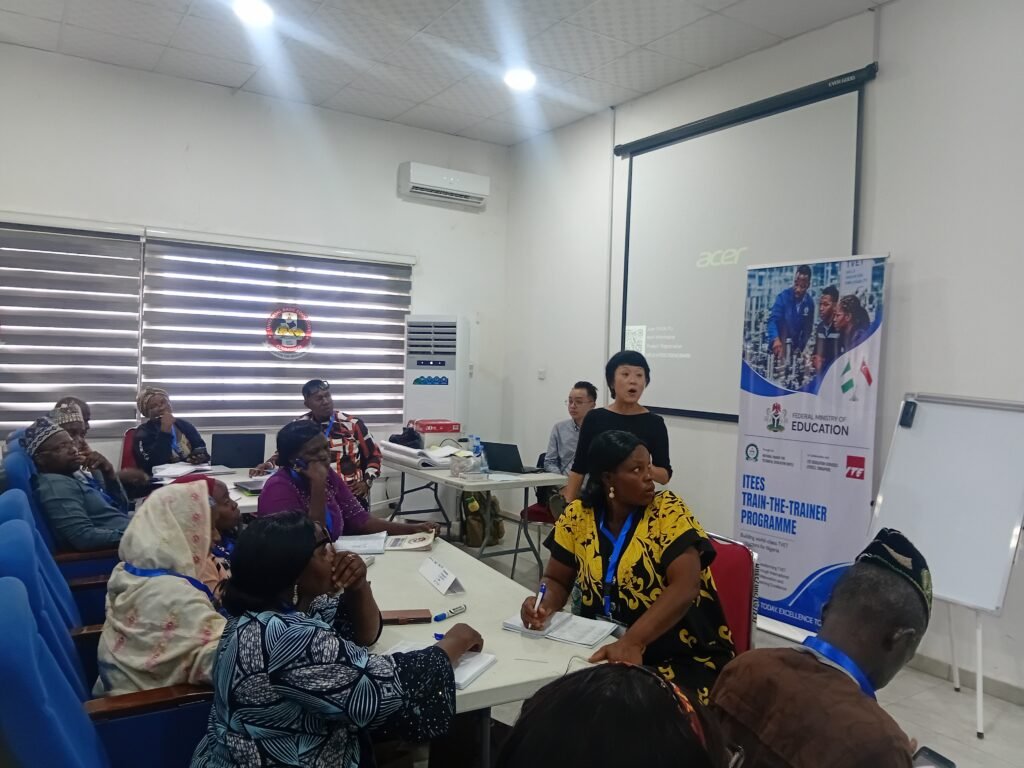
Nigeria's Federal Government has kicked off a 10-day instructor training programme in Abuja. The initiative targets educators at Federal Technical Colleges nationwide.
Adebayo Onigbanjo announced the development on Monday. He coordinates special programmes at the Education Ministry's office.
The scheme aims to strengthen Technical and Vocational Education and Training across Nigeria. It's a collaborative effort between the Federal Ministry of Education and the National Board for Technical Education.
Onigbanjo explained the core purpose simply: train instructors who will then train their peers. Each educator gains the skills to cascade knowledge throughout their institutions.
Modern teaching methods are central to the curriculum. Competency-based assessment and practical skills delivery feature prominently in the programme design.
The federal government launched its broader TVET initiative in 2025. Response exceeded all expectations, according to Onigbanjo.
About 1.3 million Nigerians registered for the scheme. That massive figure made trainer expansion urgent and necessary.
The first batch comprises 60 instructors training over 10 days. A second cohort of 60 will train in Lagos come October.
Participants come from Federal Technical Colleges across the country. They already know the existing curriculum well, officials noted.
"We need more people," Onigbanjo told reporters bluntly. He stressed that meeting demand required building trainer capacity fast.
Last year's registration numbers proved the initiative's appeal. Now the government must scale up to meet that appetite for training.
Participants will return home with fresh skills. Their job: train colleagues systematically across their home institutions.
Nabila Muhammad leads the programme and advises the education minister. She emphasized strengthening educator capacity through modern approaches.
The focus shifts from theory to competency-based methods. Instructors will learn to balance classroom lessons with hands-on technical work.
"The expectation is that trainers will leave knowing how to make teaching more competency-based," Muhammad noted. Practical skills integration becomes central to student preparation.
Students will be better equipped for workplace demands. That's the ultimate objective driving curriculum redesign.
Choo Lian, a Singaporean facilitator, brings proven expertise to the sessions. Singapore's pedagogical methods have proven effective for technical education.
Participants gain exposure to international best practices in skills training. The focus includes effective demonstrations and student engagement techniques.
Constructive feedback matters significantly in the methodology. Competency-based assessment ensures measurable learning outcomes.
"We are not teaching trades themselves," Lian clarified to participants. The goal involves teaching educators how to teach effectively.
Industry-aligned performance criteria guide all assessments. Students are evaluated against workplace expectations and standards.
Adegoke Odebode, an Assistant Director of Education, participated in the training. He teaches at Federal Technical College, Ijebu-Mushin in Lagos.
Odebode called the programme timely and necessary. Such training would boost instructors' ability to deliver quality education, he believed.