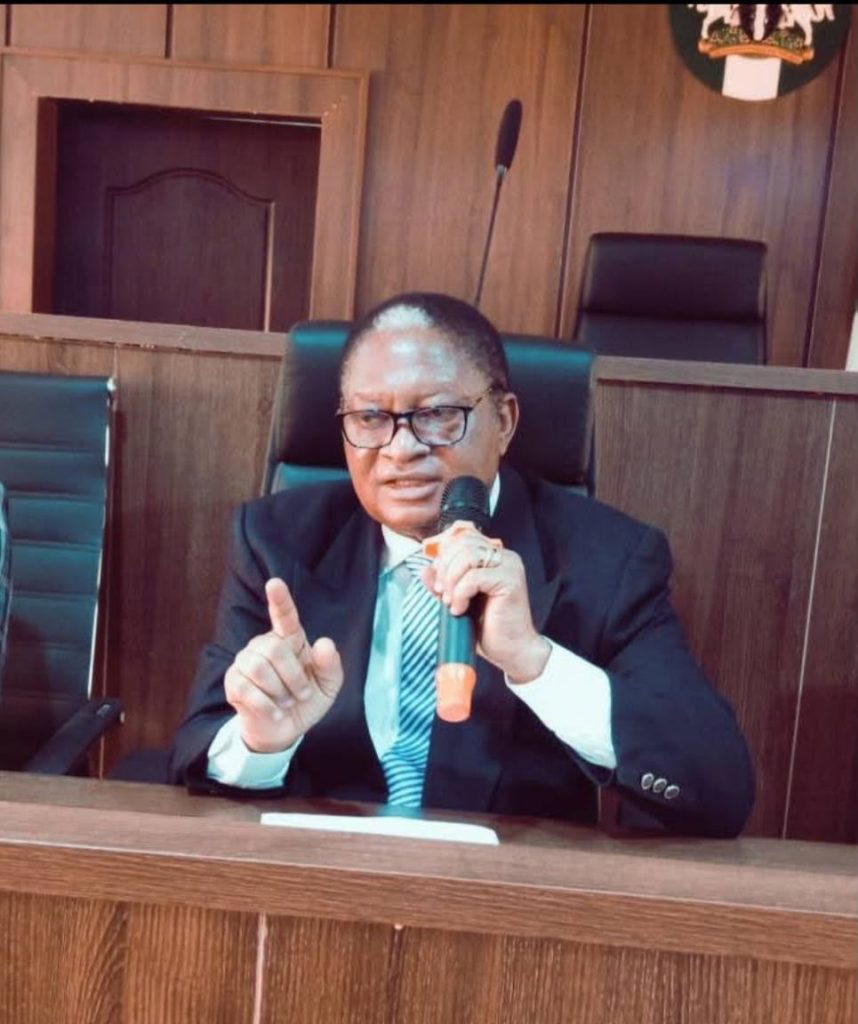
A Federal High Court in Abuja has delivered a significant ruling on INEC's powers. Justice James Omotosho declared that the electoral commission's timetable must strictly follow the Electoral Act's timeframes.
INEC can issue and modify election timetables as it sees fit. But it cannot do so in ways that contradict the law, the court ruled.
This judgment came just days after another Federal High Court panel reached a similar conclusion. Justice Mohammed Umar had nullified INEC's 2027 general election guidelines last Thursday.
Youth Party had brought that first case before the court. It challenged whether INEC's guidelines aligned with the Electoral Act's provisions.
In Monday's ruling, Justice Omotosho addressed a suit filed by the Social Democratic Party. The case, marked FHC/ABJ/CS/720/2026, had been filed against INEC.
SDP submitted five crucial questions for the court's determination in April. One asked if INEC could fix primary election timetables under the Electoral Act's sections 82 and 84(1).
The party sought seven reliefs from the court. It wanted an injunction barring INEC from enforcing timelines that violated the Electoral Act.
SDP also challenged INEC's ability to reduce the 120-day statutory period for primaries. According to Section 29(1) of the Electoral Act, this period cannot be shortened.
INEC had issued a press statement on March 27, 2026 detailing its timetable. SDP argued this directive contradicted the law's provisions.
INEC defended its position vigorously in court filings. According to the commission, its duties go beyond observing primaries to organizing and supervising all elections.
A timetable is necessary to ensure Electoral Act compliance, INEC argued. It maintained that SDP's internal affairs would not be affected by its directives.
INEC noted that SDP had not yet begun its primary elections. It also contended the case was premature and lacked legal merit.
According to INEC, its timetable didn't breach the constitution or the Electoral Act. It further denied shortening the party's timeline in any unlawful manner.
INEC asked the court to throw out the suit entirely. Officials said the matter was academic and shouldn't proceed.
But Justice Omotosho rejected INEC's arguments in his certified judgment obtained Tuesday. He declared that INEC cannot reduce the 90-day substitution period for candidates.
In his order, the judge stated the suit was not time-barred. SDP filed it on April 9, 2026, after the March 27 press statement.
Justice Omotosho defined an election timetable comprehensively in his ruling. He said it's a sequence of actions including submission of party membership registers for primary elections.
Importantly, the court noted timetables must fix specific timeframes for parties to conduct primaries. These frames must conform to the 2027 election timeline under law.
Legal experts say both rulings signal trouble for INEC's current approach. The electoral body may need to revise its timetable before the 2027 polls.