Nigeria stands at a crossroads in its economic transformation. The nation has stabilised its finances, but now faces the harder challenge of converting that stability into jobs, investment and better living standards for its citizens.
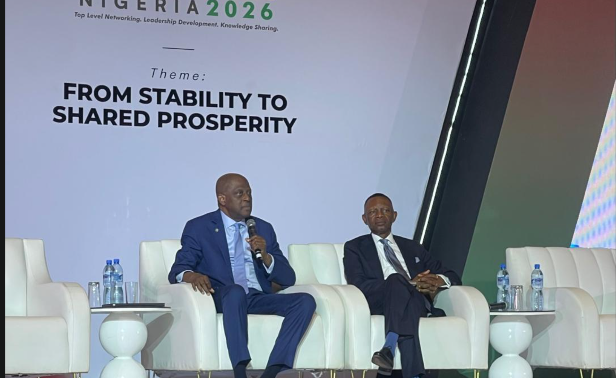
Business leaders, policymakers and economists gathered at the 14th BusinessDay CEO Forum 2026 on Thursday to discuss this shift. The conversation moved beyond celebrating recent reforms to confront the fundamental question: how can Africa's most populous nation turn economic stability into shared prosperity?
The forum's theme captured Nigeria's dual reality: growing external reserves and returning investor confidence on one side, persistent poverty and weak infrastructure on the other.
Olayemi Cardoso, governor of the Central Bank of Nigeria, painted an impressive picture of the turnaround. Nigeria's net foreign exchange reserves have surged from around $3 billion when reforms began to approximately $40 billion, he noted.
Gross external reserves now stand at roughly $52 billion, he added. This recovery restored credibility to Nigeria's foreign exchange market after years of uncertainty.
"When we started, the net exchange reserves figure was in the region of about $3 billion-plus. That figure created significant concern in the market," Cardoso told the forum.
The CBN governor attributed the turnaround to monetary and exchange-rate reforms. These policy shifts have strengthened Nigeria's external position considerably.
"We've achieved hard-earned stability, and with stability comes potential for investment. With investment comes growth, and all our local CEOs should be part of that train that is moving," he said.
Cardoso urged domestic businesses to capitalise on improving conditions. Macroeconomic stability should serve as a launchpad for private investment, not as an endpoint, he argued.
Nigeria has overhauled its economy through foreign exchange liberalisation and tighter monetary policies. These sweeping reforms targeted long-standing market distortions and external vulnerabilities.
The path to stability proved gruelling, Cardoso acknowledged. The CBN governor made unpopular decisions and weathered criticism to reach this position.
Investors and development finance institutions are watching Nigeria's progress closely, he noted. International attention on the nation's economic direction remains intense.
Taiwo Oyedele, minister of Finance and coordinating minister of the Economy, outlined an ambitious vision. Nigeria aims to extract $100 billion in incremental economic value by expanding its credit economy, he said.
Strengthening the credit system represents a critical pillar in Nigeria's plan to build a $1 trillion economy by 2030, Oyedele explained.
Yet stability alone won't guarantee prosperity. KPMG presented research at the forum showing Nigeria lags comparable emerging markets on inclusive prosperity measures.
The advisory firm's analysis revealed a sobering picture. Nigeria met only two of fifteen indicators used to assess inclusive economic development.