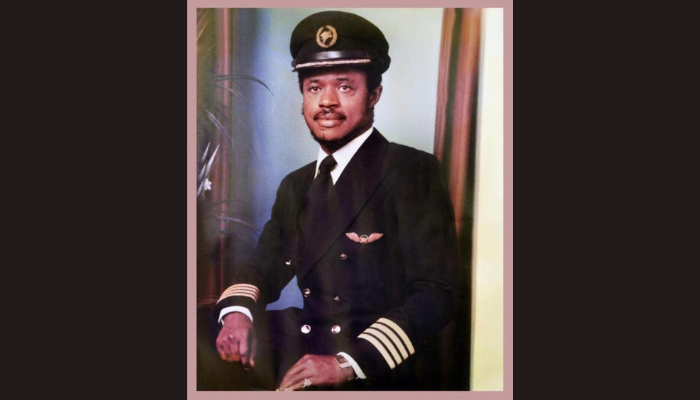
Captain August Okpe holds a distinction few will ever claim. He was the last surviving most senior pioneer pilot of the Nigerian Air Force, and his legacy is tied to one of aviation's most extraordinary achievements.
During the Nigeria-Biafra War between 1967 and 1970, a secret airport emerged from the dense jungle. This wasn't ordinary infrastructure built in ordinary times.
Uli Airport, codenamed Annabel, became the world's second busiest air corridor. Only Chicago's O'Hare International Airport handled more traffic.
What made Annabel remarkable was its invisibility. The runway lights stayed dark, switching on only for seconds as aircraft descended through the darkness, then extinguishing immediately after landing.
Enemy bombers circled overhead at night, yet this jungle facility operated with near-perfect safety records.
The airport wasn't primitive. Engineers equipped it with advanced radio navigation aids and Low Visibility Procedures interfaced with Non-Directional Beacons to guide planes through tropical darkness and weather.
Aircraft stacked up in holding patterns while others lined the approach sequence. The congestion rivalled any major international hub, yet collisions were remarkably rare.
How did they achieve this? The designers created something extraordinary: a synergistic system governing flight operations, personnel coordination, aircraft maintenance and logistics.
An entire aviation ecosystem functioned under extreme pressure in humid tropical conditions with minimal lighting.
Thousands of workers operated the facility. Families lived nearby.
Fuel trucks moved fuel. Maintenance crews kept aging aircraft airworthy.
Cargo handlers unloaded supplies in minutes.
Then aircraft vanished back into the night, carrying away the memory of their presence.
Captain August Okpe's connection to Annabel was direct and crucial. He conducted the flight test that proved the facility could operate safely and effectively.
This wasn't merely a military airport. It functioned as a joint user system serving both military and civilian operations, which demanded absolute reliability from day one.
Okpe's test flight validated Annabel. The facility passed with flying colours, and large-scale operations began immediately thereafter.
Aircraft arrived night after night carrying essential supplies. Food arrived.
Medicine arrived. Relief supplies reached desperate populations below.
All this occurred under bombardment from enemy aircraft circling above in darkness.
The aviation achievement transcended anything comparable in global history books. Yet few outside Africa knew about it, and fewer still understood its significance.
This was an African story, told by Africans, executed by African engineers and pilots and ground crews. Ground crews worked silently on the apron under blackout conditions.
Aircraft maintenance engineers performed miracles keeping ancient planes serviceable.
Air traffic controllers directed the relentless flow with precision under circumstances most would consider impossible.
Captain August Okpe, who flight-tested this marvel of African ingenuity, carried forward a legacy that deserved far greater recognition than history provided.