For decades, Kwara's healthcare system limped along on empty promises and broken equipment. Public health facilities crumbled under neglect while those who could afford it fled the state for treatment elsewhere, leaving behind only those too poor to escape inadequate care.
Governor AbdulRahman AbdulRazaq has changed that narrative. His administration didn't start with flashy announcements but instead rebuilt the system from the ground up, investing in primary healthcare centres, secondary facilities, medical equipment, health insurance and worker welfare.
The transformation is now visible across Kwara. Nearly 200 primary healthcare centres have been renovated, equipped and solarised through the Basic Healthcare Provision Fund, the World Bank's IMPACT Project, and state resources.
Eighty-three of these have jumped to modern Level-2 facilities, complete with labour rooms, laboratories, pharmacies, immunisation units, clean water and reliable electricity.
Communities like Alapa, Magaji Ngeri, Ago Oja and Ijagbo now have functional health facilities that deliver quality services locally. Residents no longer need to travel hours for basic medical attention.
The upgrades extend beyond primary healthcare. General hospitals in Patigi, Lafiagi, Kaiama and other parts of the state have undergone major overhauls.
The former General Hospital in Ilorin became the Kwara State University Teaching Hospital (KWASUTH), transforming it into a specialist healthcare hub and medical education centre.
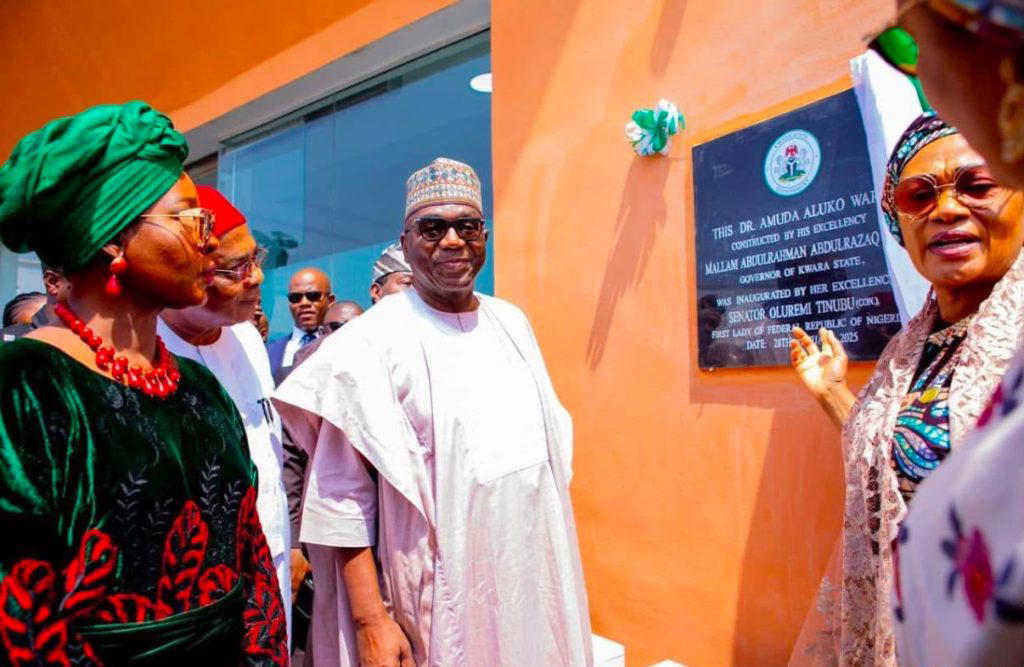
An ultramodern Intensive Care Unit at KWASUTH symbolises the administration's ambition. The facility, commissioned by Senator Oluremi Tinubu during her official visit, is the largest ICU in North Central Nigeria.
"It significantly expands the state's capacity to manage critically ill patients and complex surgical cases," reducing the need for emergency referrals outside Kwara, according to officials familiar with the project.
Diagnostic capacity has also been modernised. When AbdulRazaq took office, much of the state's diagnostic infrastructure was outdated and unreliable.
The administration procured a state-of-the-art 1.5 Tesla MRI machine to replace obsolete technology.
These aren't political slogans or campaign promises. They're tangible improvements that have restored confidence among development partners and given Kwarans genuine access to quality healthcare within their own state.
Every hospital tells a story. Kwara's story has finally changed.