
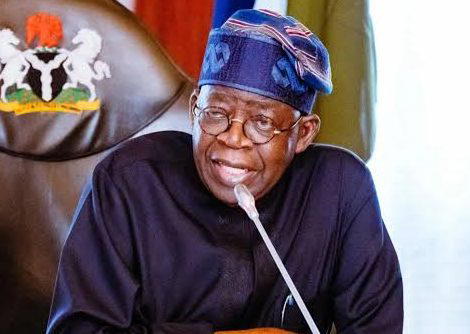
Few aspects of President Bola Ahmed Tinubu's reform agenda have drawn more public scrutiny than the economy. The debate has revolved around fiscal policy, exchange-rate shifts, inflation, taxation, investment and living costs.
These metrics typically define how governments perform because they shape economic confidence and touch the daily lives of ordinary Nigerians.
Healthcare has occupied a different space in that discussion. Most attention has centred on care access, the state of public hospitals, maternal and child health outcomes, health insurance coverage, medicine availability and primary healthcare performance.
These remain the key benchmarks for assessing health sector reform success.
They're not the only ones that matter, though. Some of the most significant effects are happening beyond hospital walls and clinic doors.
As healthcare access expands, the sector is drawing investment, spurring domestic manufacturing, boosting scientific capacity, building skilled human resources and generating fresh business opportunities.
Once seen mainly as a drain on public resources, the health sector is becoming a productive force capable of driving investment, sparking innovation, fuelling industrial expansion and creating quality jobs. That wider economic impact deserves far more attention than it's received.
It may rank among the administration's most substantial legacies when history judges this period.
On December 12, 2023, President Tinubu launched the Nigeria Health Sector Renewal Investment Initiative (NHSRII) as part of the Renewed Hope Agenda. The federal government, all thirty-six states, the Federal Capital Territory and development partners endorsed the Health Renewal Compact that day.
The Sector-Wide Approach (SWAp) replaced piecemeal interventions with a unified strategy. It established shared objectives, coordinated implementation and stronger accountability structures across Nigeria's fragmented health system.
Professor Muhammad Ali Pate, coordinating minister of health and social welfare, has driven this framework with unwavering discipline and consistency. He's translated presidential priorities into coordinated action throughout the sector.
Markets become attractive to investors when demand is organised, financing flows predictably and institutions earn trust. Fragmented systems rarely deliver those conditions.
Cohesive ones do.
The evidence is mounting. Since 2023, more than six million Nigerians have joined formal health insurance schemes.
This expansion has broadened the market for healthcare services and essential medicines significantly.
Over 4,100 primary healthcare centres are undergoing revitalisation. More than 3,100 have already been completed and are operational.
Reforms to the Basic Healthcare Provision Fund are strengthening financing reliability at the frontline. Investments in health workforce development and specialist care are expanding system capacity as use of essential health services climbs steadily.
Together, these changes transcend simple reorganisation. They're constructing a health economy that's larger, more reliable and increasingly dynamic with each passing month.