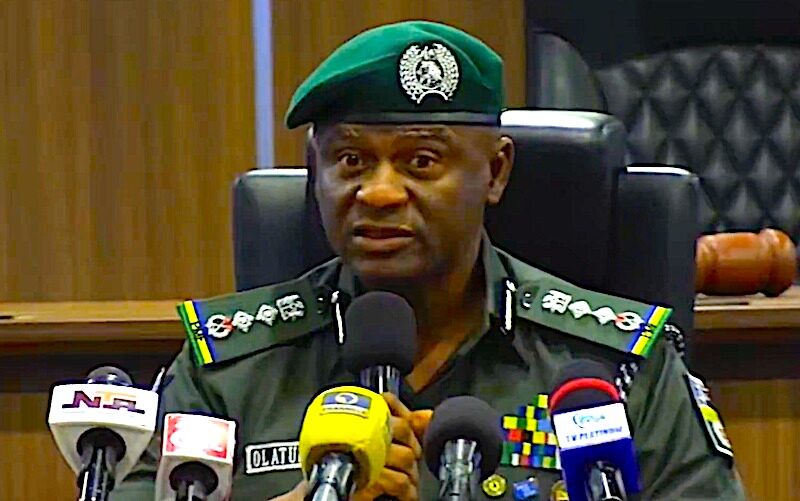
President Bola Tinubu's February 2026 appointment of IGP Olatunji Rilwanu Disu drew widespread acclaim across Nigeria. Security analysts, civil society organisations, and ordinary citizens hailed it as putting the right person in the right job.
The decision represented a deliberate pivot away from purely managerial leadership toward practical, technology-driven crime-fighting. Disu's unique profile blends top academic credentials with decades of hands-on operational fieldwork.
By choosing a leader with proven street credibility, the presidency signalled serious intent on tackling Nigeria's shifting security challenges. For anguished families nationwide—particularly parents of the recently abducted Oriire schoolchildren—this strategic move offers real, tangible hope.
Public backing for Disu's tactical abilities runs deep. He previously commanded the Lagos State Rapid Response Squad and later led the elite Intelligence Response Team.
Both roles gave him intimate knowledge of urban policing tactics, rapid-response procedures, and anti-kidnapping operations. His administrative track record strengthened during stints as Commissioner of Police in Rivers State and the Federal Capital Territory.
In Abuja and the delta regions, he navigated volatile terrain and complex metropolitan security networks. It's precisely this cross-regional tactical expertise now being applied to locate the stolen children.
A major turning point came through Disu's career-long push for digital transformation within the police force. Before becoming Inspector-General, he served as Assistant Inspector-General at the Force CID Annex in Lagos.
There, he championed data-driven investigations, cyber crime units, and geo-tracking systems. His vision shifted the police from reactive mode into proactive, intelligence-led operations.
Investigation timelines have shortened dramatically under this new framework. Field teams now deploy with superior information advantage against sophisticated criminal gangs.
For syndicates holding the Oriire students, the message cuts clear. Digital surveillance nets are tightening, and their geographic cover is rapidly shrinking.
Since taking command, Disu restructured the Force Intelligence Department entirely. Modern forensics now drive case investigations rather than outdated methods.
The Nigeria Police Force under his leadership has transformed into an intelligence-first institution. Technology and data analysis now anchor every major operation across the country.
Training academies now emphasize cyber investigation skills and digital evidence handling. Junior officers entering the force receive intensive instruction in modern tracking technologies.
Resources have been reallocated toward intelligence units and cyber crime divisions. Traditional patrol operations work in tandem with real-time digital surveillance networks.
Parents of missing Oriire schoolchildren report growing optimism about recovery prospects. They point to recent operational wins under Disu's command as evidence of changing momentum.
Community leaders in Oyo State say police visibility and tactical coordination has improved noticeably. Residents now see active intelligence gathering rather than passive waiting.
The appointment, once merely political theater, has become operational reality on the ground. Families waiting for answers see a police force that's finally fighting back with modern weapons against modern criminals.