For decades, Nigeria's accountability conversation centered squarely on the Federal Government. State governments largely escaped public view despite handling billions in resources and running critical services.
Budget documents stayed locked away. Procurement deals happened in shadows.
Financial records lacked consistency across the 36 states.
That landscape is shifting now. Signs of change are unmistakable, though plenty of work remains undone.
The transformation didn't occur overnight. It took years of institutional work, sustained pressure from civil society, and genuine citizen involvement.
BudgIT, a civic-tech organisation, has driven much of this reform over more than a decade. Their mission: help Nigerians grasp public finance and demand better governance from state leaders.
At state level, BudgIT does far more than keep scorecards. They actively assist governments strengthen fiscal transparency and budgeting systems.
Through technical training, policy talks, budget breakdowns, and data sharing, they've built frameworks allowing citizens real insight into spending decisions. It's created accountability where little existed before.
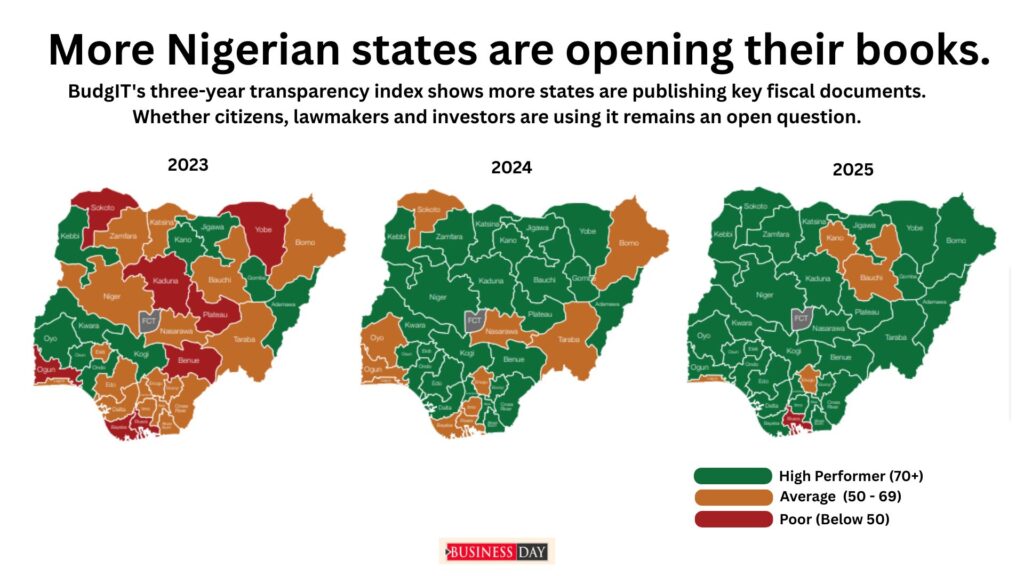
A decade ago, only scattered states released budget information publicly. Most kept their books firmly closed.
Today the picture has transformed. Most states now publish proposed budgets, final budgets, citizen-friendly versions, quarterly reports, and related fiscal data.
Journalists can now track spending. Researchers access numbers.
Civil society groups monitor allocations. Citizens know where money flows.
Transparency levels still differ between states. But governors increasingly understand that openness isn't negotiable anymore.
BudgIT's sustained focus on state-level change deserves credit. Through research and advocacy work, they've pushed governors toward better practices consistently.
More critically, they've proven transparency means more than uploading files online. Citizens must actually understand and use the data.
BudgIT's State of States series exemplifies this approach. Every Wednesday on X, stakeholders gather to examine fiscal performance across focus states.
The conversations bring together state officials, technical experts, researchers, and citizens. Discussion stays grounded in measurable performance, not political rhetoric.
Engagement levels have been remarkably strong. Citizens meet their state representatives directly to discuss governance progress and setbacks.
Policymakers now reference these discussions regularly. Development partners and investors use the data for decisions.
Researchers cite the findings in their work.
The series evaluates states using concrete metrics. Internally generated revenue, debt levels, spending patterns, fiscal discipline — all get examined closely.
By comparing performance across states, the series has deepened discussions around smart money management. It's opened genuine feedback channels between citizens and governors.
Citizens now help shape solutions for governance problems. States learn from each other's successes and failures transparently.