
Every nation relies on statistics that shape how it sees itself. Americans track quarterly GDP growth as a sign of economic health.
Europeans have watched inflation dominate their political debates. China's rise has been measured through manufacturing output and export volumes.
In many developing countries, poverty rates, unemployment figures and debt ratios drive public conversation.
Nigeria follows the same pattern. Our national debate revolves around numbers—oil production, exchange rates, inflation, foreign reserves, fiscal deficits, debt-to-GDP ratios and poverty statistics.
Each month brings fresh indicators that spark headlines, political arguments and expert analysis.
Yet these figures leave one question unanswered. Why does Nigeria consistently underperform despite its enormous potential?
For decades, Nigerians have searched for explanations. Some blame corruption, others point to poor leadership, while many cite oil dependence, weak infrastructure, policy inconsistency, ethnic divisions or insufficient investment.
Each explanation contains truth. But none fully captures why the same pattern repeats across sectors, administrations and generations.
How can a country with one of Africa's largest economies, one of the world's youngest populations, abundant natural resources, globally recognised entrepreneurs and immense cultural influence struggle to turn these advantages into lasting national success?
Perhaps we've never lacked answers. Perhaps we've simply been asking the wrong question.
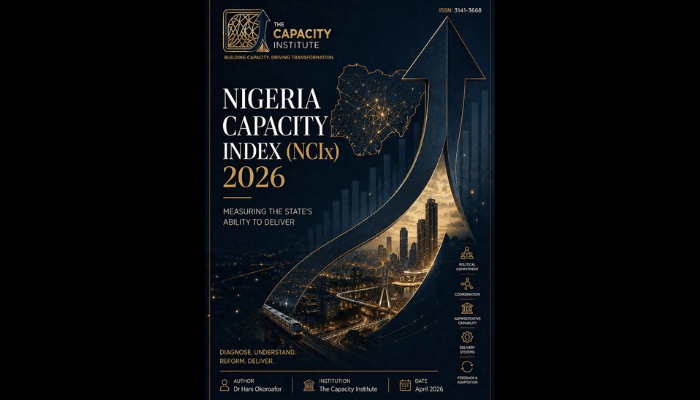
That's where the Nigeria Capacity Index 2026 becomes significant. Its overall score of 54.2 doesn't aim to compete with GDP or inflation measures.
It's not another ranking designed to reward or shame governments. It measures something different entirely—the institutional capability that underpins every policy, reform and development goal.
In other words, it assesses the strength of Nigeria's machinery for converting vision into reality. This distinction matters greatly.
When people see 54.2, they typically ask whether it signals success or failure. That question misses the point.
Capacity isn't an exam countries pass or fail. It's a diagnostic check of institutional strength.
A doctor measures blood pressure not to praise or condemn a patient, but to understand their underlying condition. The same logic applies here.
The score of 54.2 doesn't mean Nigeria is doomed to struggle or that its institutions can't improve. It reveals something far more useful: the country's execution architecture faces structural limits.
It identifies the main bottlenecks that repeatedly block the path from political intention to measurable public results.
This diagnosis solves one of modern Nigeria's great puzzles. It explains how a nation can simultaneously possess tremendous strengths yet deliver disappointing outcomes.


