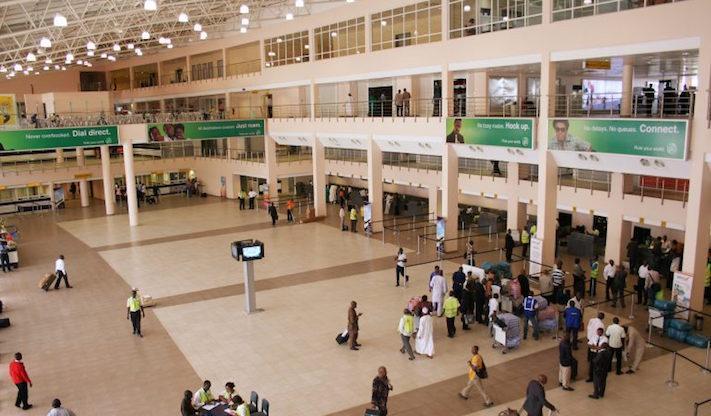
Nigeria's government is preparing to sign new airport concession deals, but the wreckage of previous failed agreements casts a heavy shadow over negotiations.
Past airport concessions have collapsed under the weight of prolonged court battles, contract breaches, and organised labour resistance. Bi-Courtney Aviation Services Limited, which operates Murtala Muhammed Airport Terminal 2 under a 2003 Build, Operate, and Transfer agreement, found itself locked in a 20-year legal war with the Federal Airports Authority of Nigeria.
The dispute spiralled into a N132 billion Supreme Court judgment against the federal government. The contract became mired in endless disputes over exclusivity clauses, the General Aviation Terminal, and unpaid concession fees.
The General Airport Concession Program, championed by the Ministry of Aviation since 2016, aimed to modernise Lagos, Abuja, Kano, and Port Harcourt airports through a large-scale public-private partnership. The initiative stalled when aviation unions staged fierce resistance, citing fears of job losses and concerns about transparency.
Recently, the government handed Akanu Ibiam International Airport in Enugu to Aero Alliance Limited under a controversial 30-year concession arrangement. The Igbo Leaders of Thought immediately rejected the deal, warning that reduced government oversight would degrade infrastructure standards and passenger services.
Port Harcourt International Airport is next on the government's concession list, sources close to the Ministry of Aviation told BusinessDay. Officials disclosed plans to concession additional airports beyond these initial targets.
Industry players have long championed airport concessions as a pathway to solving chronic infrastructure problems—outdated equipment, inadequate IT systems, and persistent flight delays. However, experts worry that repeating past mistakes could doom these new ventures.
Seyi Adewale, chief executive of Mainstream Cargo Limited, identified the core problem: a disconnect between public perception and reality. "The issues stem from inadequate due diligence in following proper procedures and the Public Procurement Act," he told BusinessDay.
Other culprits include aviation unions, corrupt decision-makers, opaque bidding processes, and overbearing state interests that push Nigeria into compromised contracts. Adewale noted that state governments sometimes force unfavourable terms onto the nation.
According to him, clearly drafted regulations backed by proper legislation create investor confidence. He emphasised the importance of transparent rules defining responsibilities for all parties, with state governments holding non-controlling roles, to ease stakeholder fears.