Nigeria and other West African nations are doubling down on efforts to eliminate Gender-Based Violence. They plan to do this by enlisting male leaders and traditional figures as agents of change.
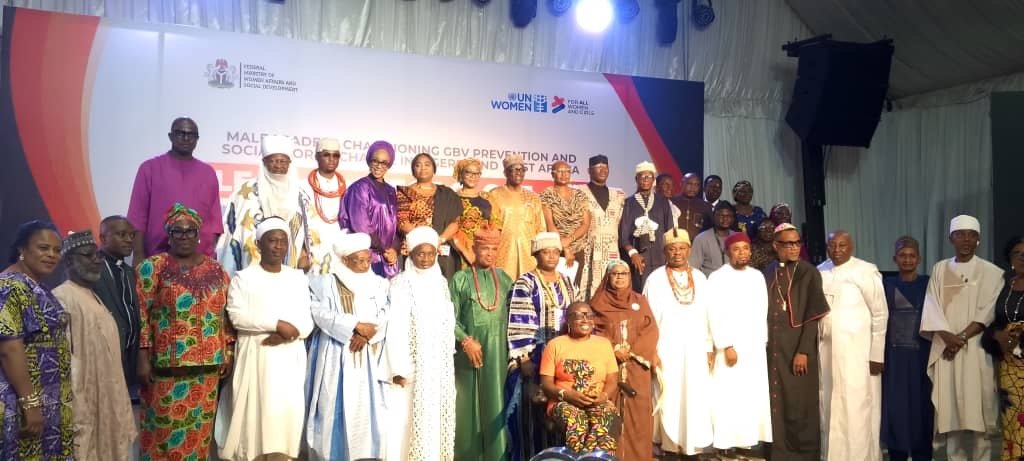
Officials made the commitment at a closing ceremony for the LEAP Project on Monday in Abuja. UN Women implemented the three-year initiative with support from the Ford Foundation.
Hajiya Imaan Sulaiman-Ibrahim, the Minister of Women Affairs, highlighted the project's success in mobilizing community leaders. She noted that traditional and religious figures had proven vital in combating violence targeting women and girls.
Mrs Blessing Anunike represented the minister at the event. She's the Director of Women Development at the ministry.
According to Anunike, the initiative equipped community leaders to challenge entrenched harmful practices. It also strengthened mechanisms for accountability and promoted healthier ideas about manhood.
"Traditional and cultural leaders play an irreplaceable role as guides for positive masculinity," Anunike said. She emphasized that redefining manhood—shifting from domination to guardianship and from violence to emotional maturity—creates peacemakers instead of abusers.
Nigeria's government intends to preserve these gains going forward. Anunike said this would happen through deeper collaboration with international partners and business stakeholders.
She also called on traditional institutions to expand women's involvement in local governance. Communities that listen to women's perspectives tend to be safer and more stable, she argued.
Beatrice Eyong, UN Women's representative to Nigeria and ECOWAS, credited the project for engaging opinion-shapers. According to her, it targeted individuals who influence beliefs and shape cultural thinking.
Mrs Patience Ekeoba stood in for Eyong at the ceremony. She serves as acting deputy representative for UN Women Nigeria and ECOWAS.
Traditional and religious leaders have emerged as stronger champions for women's rights, Eyong noted. She added that communities have begun publicly condemning dangerous practices and tightening oversight systems.
The Ford Foundation has committed fresh resources to the cause. UN Women will use funding to support community-led activism and digital safety initiatives across West Africa.
Nigeria, Ghana and Senegal will host the new phase of work. It addresses both longstanding forms of gender violence and newer tech-enabled abuse targeting women.
Recent data shows measurable improvements in Nigeria. The 2024 Demographic and Health Survey found sexual violence dropped to five percent from nine percent in 2018.
Physical violence fell from 31 percent to 19 percent over the same span. Intimate partner violence declined from 36 percent to 23 percent.
Female genital mutilation rates also improved significantly. Prevalence dropped from 20 percent to 14 percent between 2018 and 2024.
Dr Izeduwa Derex-Briggs of the Ford Foundation stressed the importance of transforming beliefs. She said lasting solutions require changing the mindsets that allow violence to persist.
Laws alone cannot solve the problem, Derex-Briggs noted. She emphasized that only trusted community leaders can effectively reshape the harmful norms that drive abuse.