
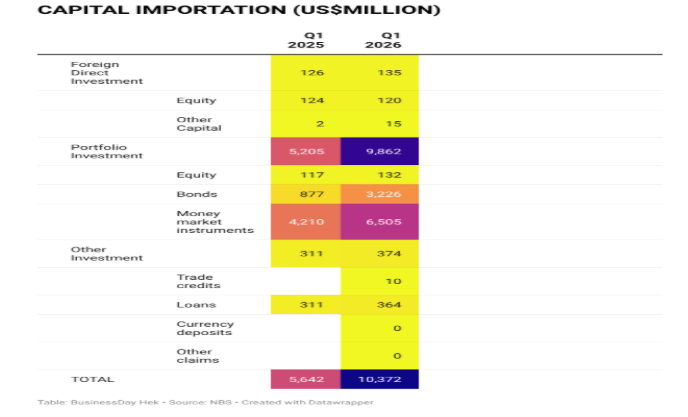
Nigeria's capital inflows jumped 84 percent year-on-year to $10.37 billion in the first quarter of 2026. The National Bureau of Statistics released the figures last week.
At first glance, the numbers vindicate the government's push to liberalise the foreign exchange market. But a closer look reveals troubling underlying weaknesses in the data.
Foreign portfolio investment dominated the inflows at $9.86 billion. That's more than 95 percent of all capital that came into the country.
Portfolio flows are notoriously volatile and short-term in nature. They chase quick returns rather than building long-term productive capacity.
The administration had hoped to attract direct investment from multinational corporations and manufacturers. Instead, most money came from hot money traders betting on currency movements.
Economists worry this pattern isn't sustainable for Nigeria's development. Real economic growth requires stable, patient capital — not speculative bets.
The carry trade continues to dominate Nigeria's financial landscape. Without diversification, the economy remains vulnerable to sudden capital flight.

