
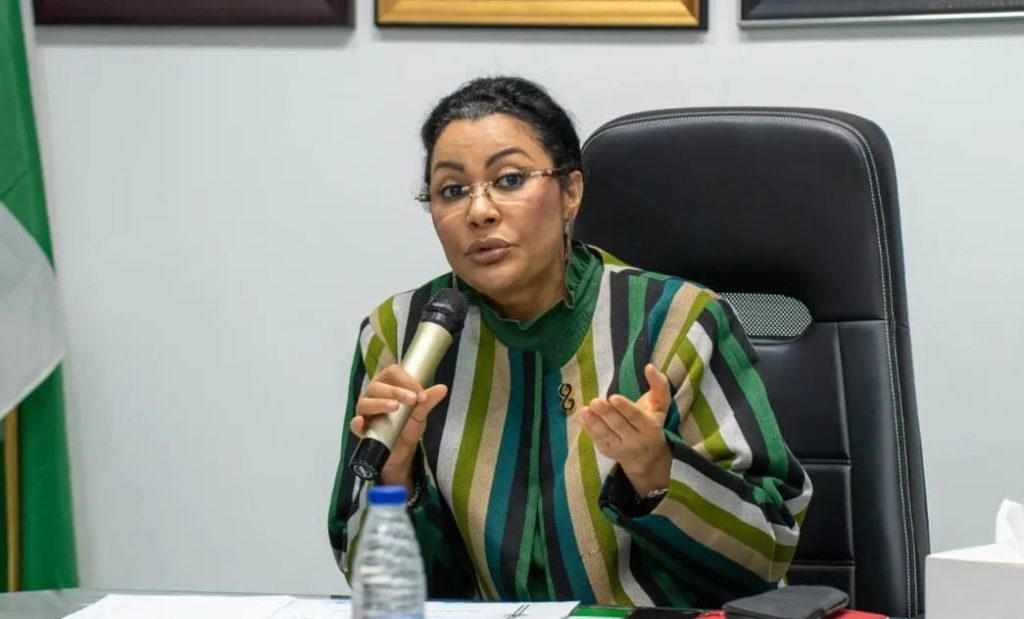
Nigeria's government is pushing for more development finance and private capital to help build a $1 trillion economy, saying public money alone won't get the job done. Dr Doris Uzoka-Anite, the minister of state for budget and economic planning, made this call at the Bank of Industry development partners' roundtable in Abuja on Thursday.
Uzoka-Anite said Nigeria must overhaul its development finance institutions to draw in investment and support productive sectors. The country's economic reforms aim to create an economy that attracts capital, grows businesses and generates jobs, she added.
Reaching the $1 trillion target will require consistent investment, stronger institutions, better project preparation and stronger ties with development partners, the minister noted. She stressed that the government is building a coordinated financing ecosystem that brings together public finance, domestic and international capital, development finance institutions, commercial finance, climate finance and other innovative financing tools.
"The aspirations of the Renewed Hope Agenda, the National Development Plan, and Nigeria Agenda 2050 cannot be financed through annual budgets alone," Uzoka-Anite said. She urged development partners to align their financing with Nigeria's pipeline of bankable projects to speed up investment and growth.
Senator John Enoh, minister of state for industry, trade and investment, said the Bank of Industry had become a strategic tool for implementing Nigeria's industrial policy. The bank finances manufacturers, micro, small and medium enterprises, youth-led businesses and other productive sectors, he explained.
The recently launched Nigerian Industrial Policy is already being implemented through a clear performance framework, Enoh added. The first 90-day implementation report shows progress in industrial clusters, MSME development, skills training and export competitiveness, he noted.
"Development finance must ultimately be measured by the results, by the jobs it creates, by the industries it builds, and the lives it improves," Enoh said. Dr Olasupo Olusi, the bank's managing director and chief executive officer, said BOI had shifted from measuring success by loan volume to measuring actual development impact created by its financing.
The bank's 2025 Annual Development Impact Report reflects its commitment to accountability, transparency and measuring real impact on businesses, communities and the wider economy, Olusi explained. He assured that BOI will continue deepening strategic partnerships and aligning its financing with Nigeria's development priorities to promote inclusive growth, industrialisation and shared prosperity.