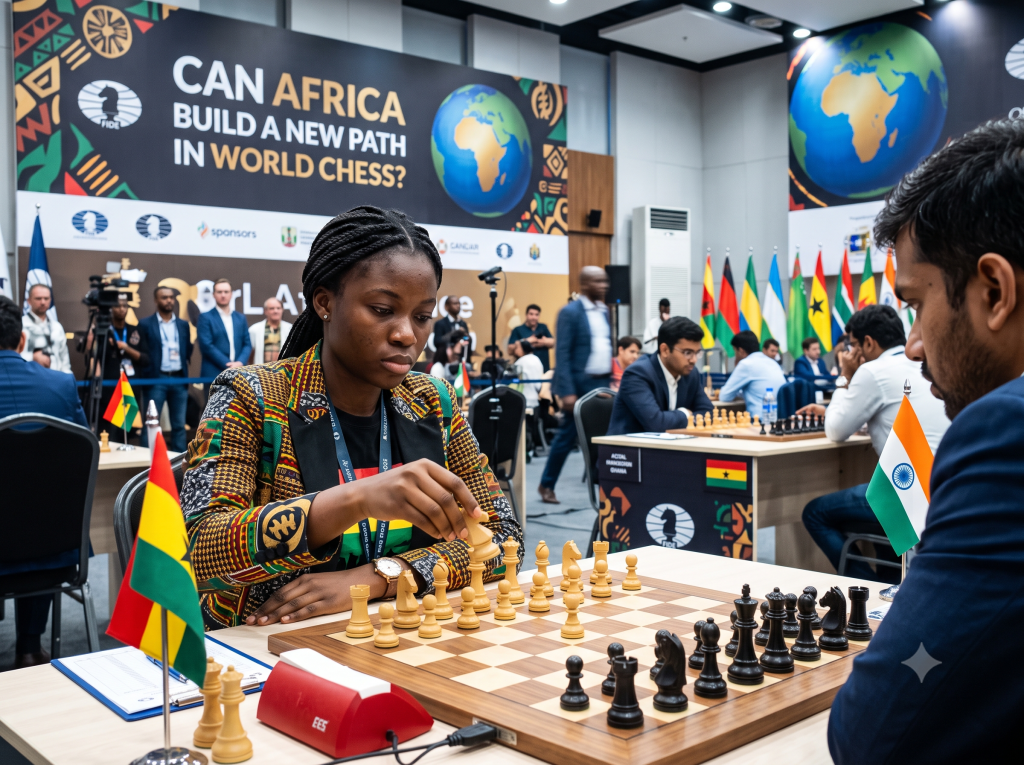
Cape Town will host the World Schools Team Chess Championship African qualifying round from July 6 to 11, 2026. The tournament represents a critical moment for the continent's chess ambitions, offering young players a pathway to international competition.
Africa has produced remarkable chess talent over the decades. Egypt's Bassem Amin became the first African super-grandmaster to breach the 2700 rating threshold on the FIDE list, while Zambia's Amon Simutowe earned the distinction of being sub-Saharan Africa's first grandmaster.
South Africa's Kenny Solomon made history as his nation's inaugural grandmaster. Nigeria's Tunde Onakoya transformed chess into a beacon of hope for children in Lagos's poorest neighborhoods, capturing global attention through his work.
Yet these successes, while inspiring, remain largely isolated achievements rather than evidence of a sustainable ecosystem. The real challenge facing African chess is whether the continent can construct the institutional infrastructure needed to nurture young talent systematically.
A gifted 10-year-old in Lagos, Lusaka, Nairobi, Rabat, or Cape Town needs more than raw talent to succeed. They need a clear progression from school clubs to competitive tournaments to international arenas.
The Cape Town championship, backed by Nasdaq-listed fintech company Freedom Holding Corp., tests an ambitious vision: transforming African chess from scattered individual successes into a coherent talent development system. Winners of the African qualifying stage will advance toward the world championship finals in December 2026.
Teams from across the continent will compete for young players aged 8 to 14, many experiencing international competition for the first time. The team format proves particularly valuable for schools and federations, forcing them to develop depth rather than relying on single standout players.
Africa's chess landscape remains fragmented. Some nations boast well-funded federations, established coaching networks, and regular tournaments with strong players.
Others depend entirely on passionate volunteers, schoolteachers, modest clubs, or nonprofit initiatives.
The critical bottleneck rarely involves identifying talented children. Instead, the shortage stems from the absence of structured pathways connecting promising young players to professional opportunities.
This distinction between prodigies and systems matters profoundly. A prodigy might emerge anywhere through chance and circumstance, he said.
A system, by contrast, ensures that emerging talent doesn't vanish into obscurity.
The practical barriers to development are steep. While chess requires relatively inexpensive basics—a board, pieces, internet access—reaching professional levels demands substantial investment.
International travel, visa expenses, accommodation, professional coaching, and access to analytical databases all carry significant costs.
Without coordinated partnerships between federations, schools, private corporations, and international bodies, promising young African players often remain underdeveloped. Their potential withers simply through lack of opportunity and resources.
Freedom Holding Corp. and entrepreneur Timur Turlov have emerged as significant backers. The company has dramatically increased its chess investments in recent years, supporting tournaments at school and international levels while building infrastructure across the continent.
FIDE and the International School Chess Federation will oversee the Cape Town tournament. The championship reflects a growing recognition that Africa's chess future depends less on finding exceptional individuals and more on building the systems that transform talent into achievement.