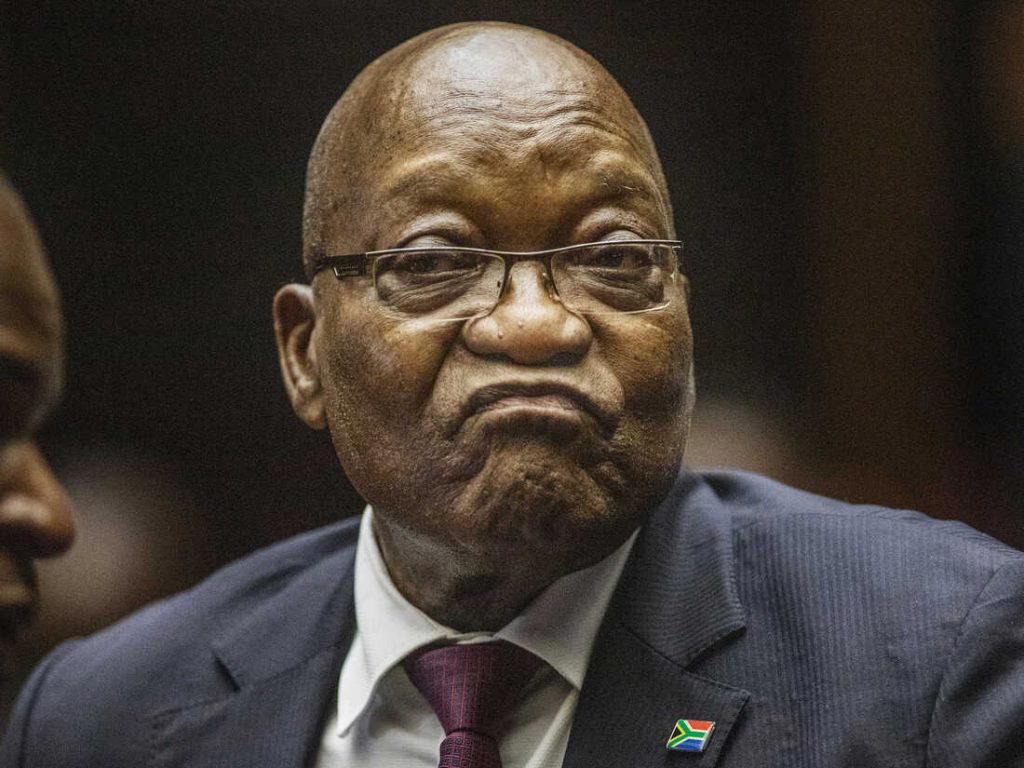
South Africa's government came down hard on ex-president Jacob Zuma on Friday after he met with one of the Gupta brothers in India. The businessman faces accusations of looting millions in state assets, and a video of their encounter sparked outrage in the country.
In the footage posted on social media last month, the 84-year-old Zuma hinted he'd make another bid for power after leaving office in 2018 under a cloud of graft allegations. "It is very disturbing that a former state president openly and unapologetically shows the middle finger to South Africans who have lost a lot of money through the Gupta brothers' shenanigans," cabinet minister Khumbudzo Ntshavheni said.
She told reporters that Zuma "continues to show a middle finger and claim that he wants to run this country again." The government opened an inquiry into the visit, with foreign minister Ronald Lamola accusing the ex-leader of conducting his own "parallel foreign policy".
Zuma was photographed alongside Ajay Gupta at a temple in Haridwar, a pilgrim city on the River Ganges in India. In the video, he described Ajay as a "brother and friend".
The three Indian-born Gupta brothers built a vast commercial network in South Africa before fleeing once a judicial commission began probing them in 2018. They faced charges they orchestrated what's known as "state capture"—massive fraud that occurred under Zuma's presidency.
A 2016 report from South Africa's anti-graft agency claimed the brothers paid off officials to secure ministerial roles and raid state institutions. Ajay was branded a fugitive in 2018, though authorities scrapped those charges a year later.
His younger brothers, Atul and Rajesh, escaped to the United Arab Emirates, where a court rejected South Africa's extradition request in 2023. In the video, Zuma declared: "I decided to take a decision to retake the country forward.
I am contesting."
Ntshavheni branded it a "disgrace" that South Africa's high commissioner to India, Anil Sooklal, had gone along to the meeting with Ajay Gupta. Zuma led the country from 2009 to 2018 and now chairs the Umkhonto we Sizwe opposition party, ahead of local elections in November and the next presidential ballot in 2029.