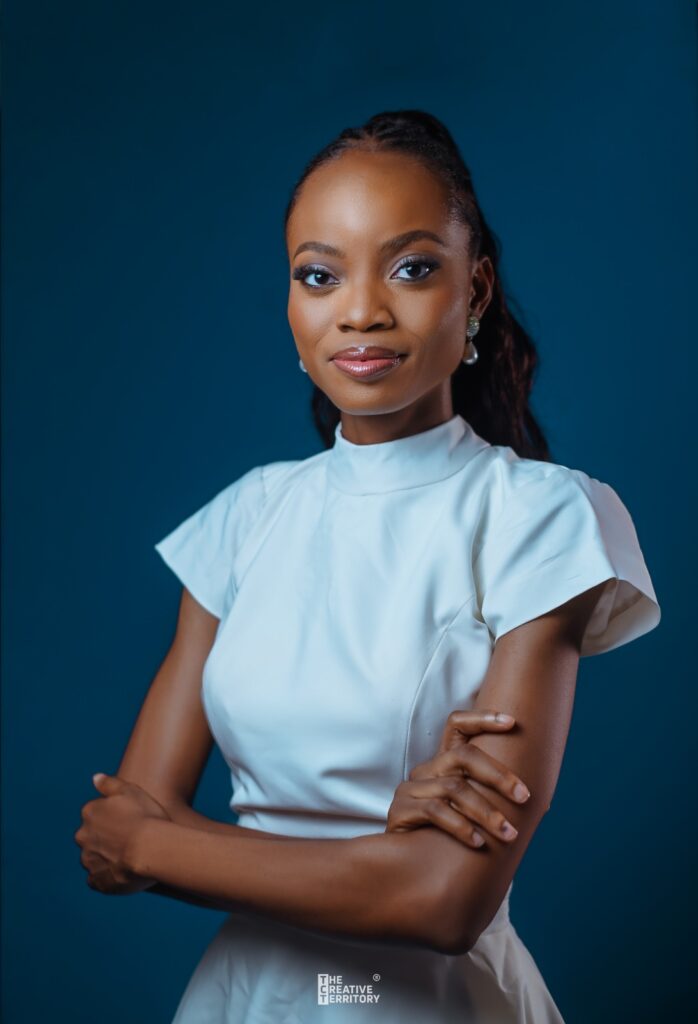

Mirabelle Morah wrapped up the second cohort of her Grohwie Design Fellowship in June 2026, placing emerging designers on real client work across the UK, Nigeria and Uganda. The programme tackles a problem most design schools ignore: how to turn creative talent into commercial success.
Building a design portfolio is straightforward these days. Teaching designers to create business value, solve actual problems and survive commercial scrutiny is far harder.
Morah, a motion designer and creative director born in Nigeria and now based in Scotland, launched the fellowship in 2025. She'd just finished an MSc in Entrepreneurship and Innovation at the University of Edinburgh, supported by a Mastercard Foundation scholarship.
The fellowship skips the software tutorials. Instead, it trains emerging designers to think like business people, to become professionals organisations want to hire, and to turn ideas into measurable results.
That commercial mindset comes straight from Morah's own work. Before relocating to Scotland, she spent years bridging design, advocacy and communications in Nigeria.
She draws inspiration from multidisciplinary designers like Temi Coker and writer Chimamanda Ngozi Adichie, plus design movements spanning New Wave to Brutalism.
Her visual language blends photography, illustration and motion, prioritising emotional resonance over stylistic purity. She's worked with National Geographic's Photo Camp and spent time embedded in animation and creative industry spaces.
The first cohort focused on removing entry barriers. Morah offered fellows stipends and brought in Scottish agency directors, creative leaders and senior product designers—including staff from Intercom—to run workshops.
The second cohort, running April to June 2026, expanded significantly. Four weeks covered creative business strategy, portfolio development and client communication.
Fellows then spent four weeks on live briefs for real organisations. These included ATTA Breastmilk Community, a Ugandan NGO tackling neonatal mortality, the Social Enterprise World Forum in the UK and the Durian Foundation in Nigeria.
Morah built the curriculum from what fellows told her they struggled with most. "People don't only need design skills," she said.
"They need to know how to turn those skills into work that creates value for businesses, charities, communities and even themselves."
The numbers are striking. Nearly 300 applications came in across both cohorts, 26 designers graduated, and the completion rate hit 82 percent with 91 percent participant satisfaction—figures that rival the most rigorous design education programmes operating between the UK and Africa.
One fellow from the first cohort described the experience shifting her perspective entirely. "It's like a perspective shift for me," she told reporters.
"I was shown a whole other new world of possibilities. Hearing the stories of these important people made me realise that I can do all that I set my mind to."
Morah continues running Grohwie Studio from Glasgow, maintaining the daily operations alongside the fellowship.