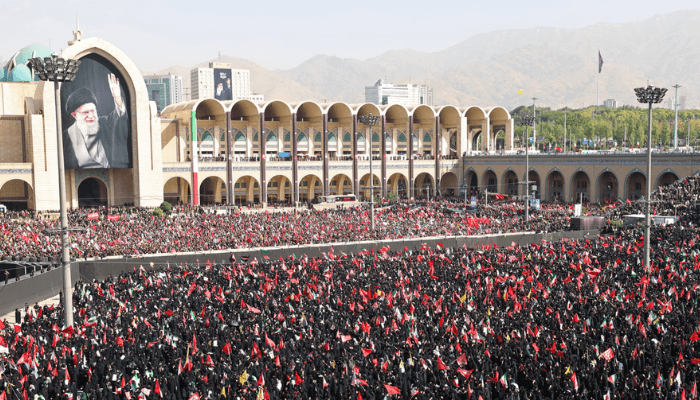
Iran's supreme leader, Ayatollah Khamenei, was strikingly absent from his father's funeral even as senior officials and millions of mourners gathered to honour the late leader. His no-show sparked fresh questions about his health and current whereabouts.
President Masoud Pezeshkian, Revolutionary Guards commander Ahmad Vahidi and Khamenei's three brothers—Masoud, Mostafa and Meysam—all attended the ceremony. Unconfirmed reports had suggested Khamenei suffered injuries during American and Israeli strikes that killed his father earlier this year.
Official mourning rites began on Friday and will stretch across Iran and Iraq in the coming days. State media dubbed it the "funeral of the century" as authorities braced for between 12 and 20 million people to pay respects to a man who steered the Islamic Republic for more than 30 years.
Donald Trump, the United States president, offered to broker peace between Russia and Ukraine during a nearly 90-minute call with Vladimir Putin, the Kremlin said. The two leaders discussed the conflict ahead of next week's NATO summit, with Trump restating his eagerness to push for a swift end to the fighting.
Russia made clear any deal must shield its core strategic interests, according to Kremlin aide Yury Ushakov. Volodymyr Zelenskyy, Ukraine's president, also spoke with Trump that same day and confirmed they covered conditions along the 1,200-kilometre front line.
Zelenskyy said both men agreed to keep talking during the NATO meeting as diplomatic channels remain active despite the ongoing conflict. The three-way conversations underline persistent attempts to find an exit even as fighting continues.
Iran signalled plans to levy fees on ships transiting the Strait of Hormuz once a temporary deal with the United States expires, though it pledged special rates for China and other allies. Abdolreza Rahmani Fazli, Iran's ambassador to China, made the announcement at the World Peace Forum in Beijing.
According to him, the charges would pay for maritime security, navigation support and environmental safeguards rather than serve as simple transit tolls. Washington has pushed back firmly, insisting Iran cannot impose levies on commercial vessels under any lasting agreement.
That disagreement looms as negotiations over a permanent settlement continue following last month's ceasefire. Both sides remain at odds on whether such fees are permissible or constitute an unacceptable restriction on global shipping.
OPEC+ greenlit another round of output increases starting in August, signalling renewed hope that exports through the Strait of Hormuz are gradually normalising after months of disruption. The alliance approved raising production targets by 188,000 barrels per day, adding to hikes rolled out in June and July.
Oil quotas have climbed steadily since April, yet actual output stayed below agreed levels because conflict involving Iran choked tanker traffic through the vital waterway. Supplies have now begun bouncing back as conditions improve.