By Juliet Umeh
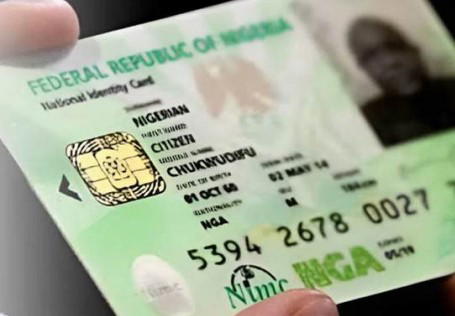
NIGERIA’S multi-billion naira digital identity crusade has run into a wall of skepticism. While the National Identity Management Commission (NIMC) is pulling out the celebratory drums on the international stage, declaring an absolute victory over the era of fragmented databases, the everyday reality for millions of Nigerians paints a jarringly different picture of systemic gridlock, exorbitant correction fees, and analogue bureaucracy.
Read Also: Fake agency originated from Buhari government — Budget Office explains PFIPC allocation
The Director-General of NIMC, Engr. Abisoye Coker-Odusote, set off the fireworks at the ID4Africa Annual General Meeting in Abidjan, Côte d’Ivoire. She boldly claimed that the National Identification Number (NIN) has officially matured into the nation’s undisputed master identity infrastructure.
According to NIMC, the chaotic decades of government agencies operating isolated, non-communicating data silos are over. In this new regime, taxation, immigration, banking, and telecom networks are supposedly plugged into a real-time, singular verification artery.
“We no longer have fragmented databases in place because we have been able to integrate based on use cases,” Coker-Odusote insisted to Saturday Vanguard. “The NIN is the master ID, which means your sectoral ID only works for that sector… However, the NIN works for all the sectors.”
But an extensive Saturday Vanguard investigation, unveiling the bitter frustrations of tech experts, corporate bankers, and ordinary citizens, reveals a troubling gap between bureaucratic pronouncements and actual field operations.
Omobola’s ordeal
When Mr. David Omobola recently walked into a bank in Lagos to open a new account, he expected the process to be straightforward.
After all, he already possessed a National Identification Number, NIN, the unique identifier that the Federal Government says now underpins Nigeria’s digital identity ecosystem.
Instead, he was asked to complete forms containing information he believed should already exist in the national identity database.
“I recently opened a First Bank account and had to provide all my details again- my name, age, date of birth and other information -even after giving them my NIN,” he told Vanguard.
For Omobola, the experience raised questions about how far integration has actually gone.
“I don’t think they have fully integrated NIN into the systems of government agencies and private organisations yet. If they had, there would be less need for people to keep submitting the same information everywhere they go,” he said.
The real question is no longer whether the NIN has become Nigeria’s foundational identity credential-few dispute that it has. Rather, the issue is whether organisations have fully adopted the authentication and interoperability tools needed to translate that infrastructure into a seamless experience for citizens.
Cost of data mismatches
For Mrs. Mercy Obadare, a small business owner, the challenge was not repeated data collection but conflicting data.
Recalling an ordeal she endured last year, she recalled how a mismatch between her NIN record and international passport created months of frustration.
“My date of birth on the NIN was different from what was on my international passport. I don’t know how it got mixed up because I provided the correct information during registration,” she told Vanguard.