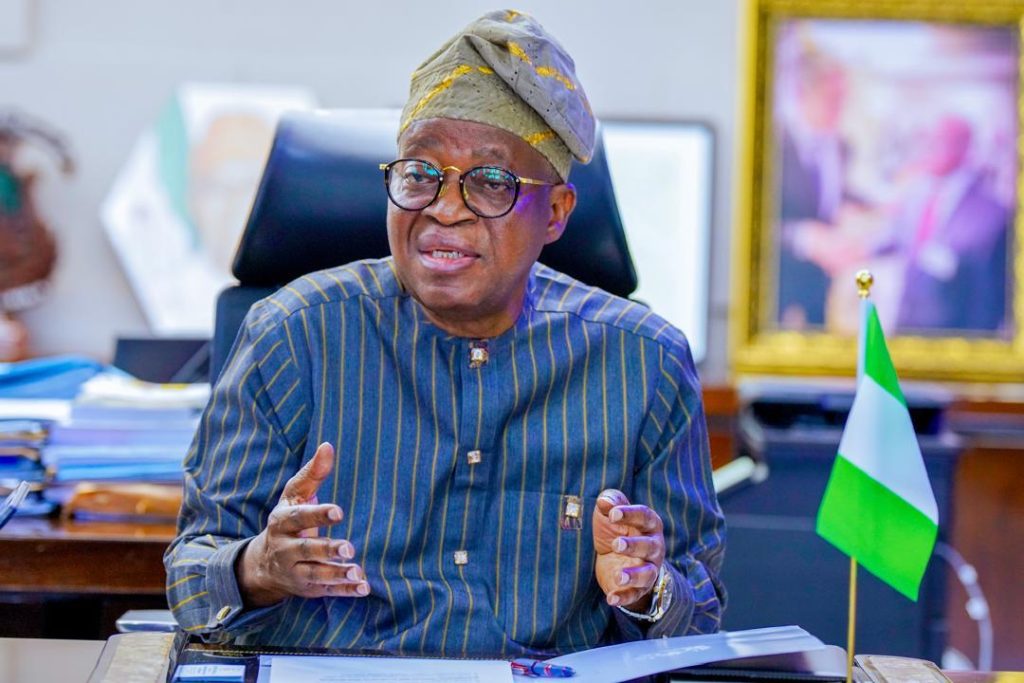
The minister of marine and blue economy, Dr Adegboyega Oyetola, has urged the federal and state governments, private sector players and development partners to work together to speed up implementation of Nigeria's national marine and blue economy policy. He described involvement from sub-national governments as vital to releasing the sector's economic possibilities.
Oyetola made the remarks at the second quarter 2026 engagement session held in Lagos last week by the federal ministry. The forum centred on moving from policy design to action and mobilising state authorities to execute the national strategy effectively.
Nigeria has moved past the stage of creating policies and must now concentrate on execution that produces real economic gains, he said. The national policy provides a strategic framework for tapping into the country's oceans, waterways, fisheries and coastal zones, but success requires coordinated effort across government levels, the minister added.
Many blue economy resources sit within states and communities, making sub-national players crucial partners in driving investment, job creation, food security and environmental protection, according to Oyetola. Reforms under President Tinubu's administration have boosted stakeholder involvement, pulled in investment, strengthened maritime security and lifted Nigeria's port competitiveness, he noted.
The World Bank and S&P Global Market Intelligence ranked Tin Can Island Port as the tenth most improved port worldwide and Lagos Port Complex, Apapa, as the twelfth most improved between 2020 and 2025, he cited. Bayelsa State Governor Senator Duoye Diri praised Tinubu for creating the federal ministry, calling it a smart move to broaden the economy.
Diri said his state established its own marine and blue economy ministry in June 2024 to support its prosperity agenda.
Aliko Dangote, president of Dangote Industries Limited, stressed that the policy's success rests on sustained private sector backing. He was represented by Simeon Akin Omole, managing director of Dangote Port Operations, at the event.
The policy aims to generate three million jobs over four years, achieve annual sector growth of seven per cent and reserve at least 50 per cent of new positions for people aged 18 to 35, Omole said. Industrial change depends on steady policy backing, strong infrastructure, credit access and investor trust, he added.