
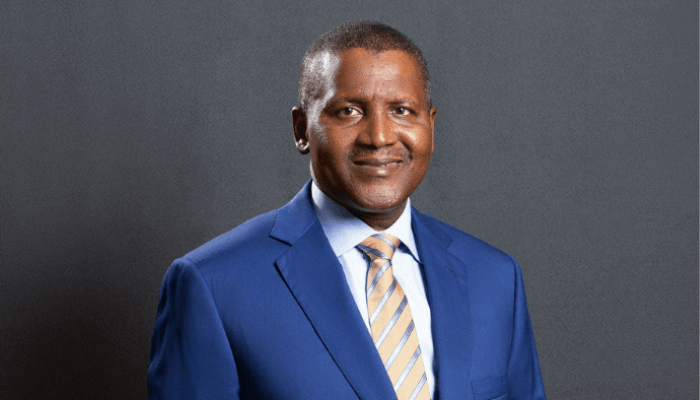
On Lekki's windswept coastline, just beyond Africa's largest city, sprawls a vast industrial complex of steel pipelines and towering distillation columns that could reshape the continent's economic landscape. Aliko Dangote, already Africa's richest person, is betting big here: building a $100 billion industrial powerhouse centred on crude oil and fertilizers.
According to Bloomberg's financial analysis, the Nigerian billionaire is orchestrating something far more ambitious than expanding his cement and sugar interests. His conglomerate is set to grow fivefold over the next decade, with annual revenues climbing from $20 billion today to $80 billion within three years, then surpassing $100 billion by 2030.
The Dangote Petroleum Refinery and Petrochemical complex forms the cornerstone of this expansion. The facility processes hundreds of thousands of barrels daily, designed to end Nigeria's fuel imports, reshape regional energy markets, and satisfy rising continental demand.
His fertilizer division is scaling aggressively alongside the refinery operations. The unit targets becoming one of the world's largest urea producers, boosting farming productivity across Africa while securing lucrative export markets globally.
This $100 billion push arrives during a critical moment for world trade. Supply disruptions and shifting trade patterns have driven demand higher for refined fuels and nitrogen-based fertilizers, both sectors where Dangote operates prominently.
The momentum has lifted Dangote's personal wealth to a record $35.1 billion on the Bloomberg Billionaires Index at the time this analysis was conducted. The industrial tycoon commands a proven track record in dominating heavy industry, providing substantial confidence in his expansion strategy.
Challenges loom ahead: volatile oil prices, complex regional logistics, and foreign exchange volatility across African markets could derail progress. Yet by linking energy security with agricultural production, Dangote is positioning his empire as more than just a domestic force—it's becoming indispensable to global supply chains.